Word Explanation
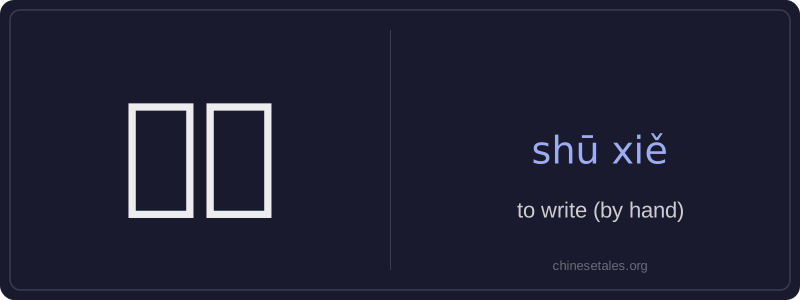
书写 (shū xiě) is a verb meaning 'to write (by hand)' — emphasizing the physical act of forming characters with pen, brush, or pencil, rather than typing. The character 书 (shū) originally meant 'book' or 'script', and carries the sense of written language; 写 (xiě) means 'to write' or 'to copy'. Together, they form a formal, slightly literary term that highlights intentionality and craftsmanship in handwriting — often used in educational, calligraphic, or official contexts.
This word is commonly found in phrases like 书写规范 (shūxiě guīfàn, 'handwriting standards') or 书写能力 (shūxiě nénglì, 'handwriting ability'). It’s more formal than just 写 (xiě) and rarely used for digital writing — for typing, you’d say 打字 (dǎzì). While it can appear in everyday speech, it’s especially frequent in teaching materials, exams, and discussions about literacy or penmanship.
Example Sentences
Related Words
见面
见面 literally means 'see face' — combining 见 (t
后来
Later (hòulái) is an adverb meaning 'afterwards'
背后
背后 literally means 'back + behind' and functions
我的
我的 (wǒ de) is a possessive pronoun meaning 'my'
这么
这么 (zhè me) is an adverb meaning 'so' or 'this
中学
'Zhōngxué' literally combines 'zhōng' (middle)
前面
前面 (qián miàn) literally combines 前 (qián, '
面条
‘面条’ (miàn tiáo) literally means ‘flour str