Word Explanation
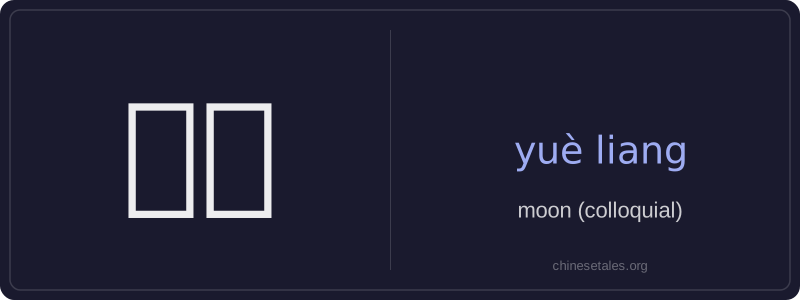
‘月亮’ (yuè liàng) is the most common colloquial term for ‘moon’ in Mandarin Chinese. Though it literally combines ‘month’ (月, yuè) and ‘bright’ (亮, liàng), its meaning is not compositional—it’s a fixed noun, not a description of brightness during the month. Historically, the character 月 originally depicted a crescent moon, and over time became associated with both ‘moon’ and ‘month’. The addition of 亮 reinforces the visual quality of the celestial body—its luminous appearance in the night sky.
This word is used in everyday speech, poetry, storytelling, and children’s language. It carries gentle, poetic, or nostalgic connotations—often evoking quiet nights, romance, or traditional festivals like Mid-Autumn Festival. Unlike the more formal or literary term ‘月球’ (yuè qiú, ‘lunar body’), ‘月亮’ feels warm and familiar, frequently appearing in idioms (e.g., 花好月圆 huā hǎo yuè yuán, ‘flowers blooming, moon full’) and songs.
Example Sentences
Related Words
见面
见面 literally means 'see face' — combining 见 (t
后来
Later (hòulái) is an adverb meaning 'afterwards'
背后
背后 literally means 'back + behind' and functions
我的
我的 (wǒ de) is a possessive pronoun meaning 'my'
这么
这么 (zhè me) is an adverb meaning 'so' or 'this
中学
'Zhōngxué' literally combines 'zhōng' (middle)
前面
前面 (qián miàn) literally combines 前 (qián, '
面条
‘面条’ (miàn tiáo) literally means ‘flour str