Word Explanation
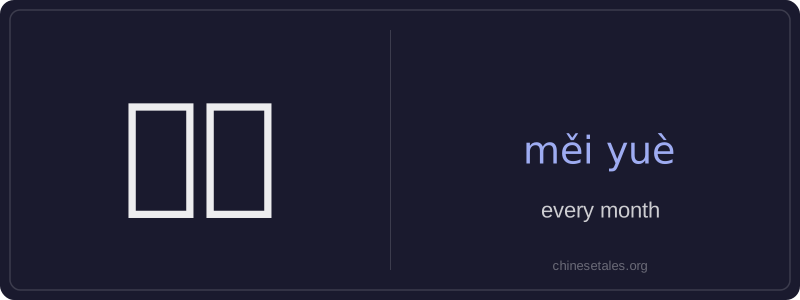
每月 (měi yuè) literally combines 每 (měi), meaning 'each' or 'every', and 月 (yuè), meaning 'month'. Together, it functions as an adverb meaning 'every month' — indicating regular, recurring action or occurrence at monthly intervals. It typically appears before a verb or adjective in a sentence, often near the beginning or right before the predicate, and is commonly used in schedules, routines, subscriptions, reports, and financial contexts.
This term is neutral in register and widely used in both spoken and written Chinese. Unlike some time expressions that require measure words (e.g., 三个月 for 'three months'), 每月 stands alone and does not take additional particles like 的 or 了 when indicating frequency. It emphasizes consistency over duration — focusing on repetition rather than length of time. Learners should avoid confusing it with 一月 (yī yuè, 'January') or 本月 (běn yuè, 'this month'), as tone and context are critical for distinction.
Example Sentences
Related Words
见面
见面 literally means 'see face' — combining 见 (t
后来
Later (hòulái) is an adverb meaning 'afterwards'
背后
背后 literally means 'back + behind' and functions
我的
我的 (wǒ de) is a possessive pronoun meaning 'my'
这么
这么 (zhè me) is an adverb meaning 'so' or 'this
中学
'Zhōngxué' literally combines 'zhōng' (middle)
前面
前面 (qián miàn) literally combines 前 (qián, '
面条
‘面条’ (miàn tiáo) literally means ‘flour str