Word Explanation
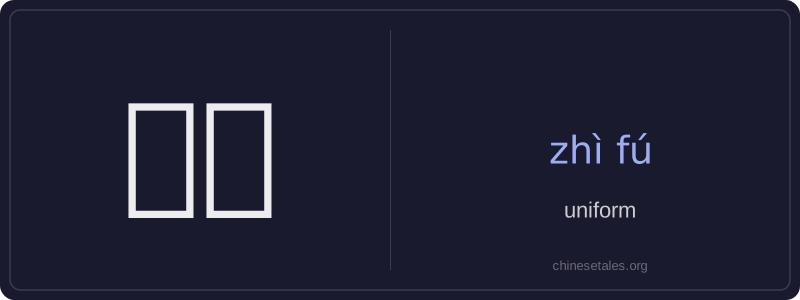
制服 (zhì fú) literally means 'to make (制) clothing (服)' — the character 制 implies regulation, standardization, or making according to set rules, while 服 means 'clothing' or 'garment'. Together, they refer to standardized clothing worn by members of a specific group to indicate identity, role, or affiliation. It is commonly used for work uniforms (e.g., police, nurses, flight attendants), school uniforms, and military attire.
Unlike casual clothes, a 制服 signals formality, institutional belonging, and often authority or service function. It’s not just about appearance: wearing one usually carries expectations of professional conduct. The word does not imply coercion (despite 制 also meaning 'to subdue'), nor is it used for costumes or fancy-dress outfits — those are called 服装 (fúzhuāng) or 戏服 (xìfú). In everyday speech, 制服 is neutral and widely understood across age groups and regions.
Example Sentences
Related Words
见面
见面 literally means 'see face' — combining 见 (t
后来
Later (hòulái) is an adverb meaning 'afterwards'
背后
背后 literally means 'back + behind' and functions
我的
我的 (wǒ de) is a possessive pronoun meaning 'my'
这么
这么 (zhè me) is an adverb meaning 'so' or 'this
中学
'Zhōngxué' literally combines 'zhōng' (middle)
前面
前面 (qián miàn) literally combines 前 (qián, '
面条
‘面条’ (miàn tiáo) literally means ‘flour str