Word Explanation
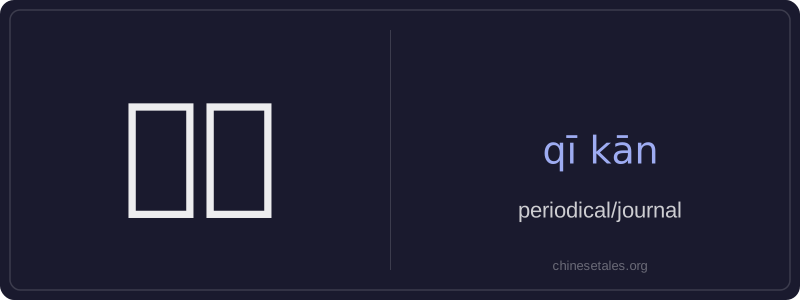
期刊 (qīkān) is a formal noun meaning 'periodical' or 'journal'—a publication issued regularly (e.g., weekly, monthly, or quarterly) containing articles, research, or commentary on a specific subject. The character 期 (qī) means 'period' or 'issue', referring to the time-based recurrence of publication; 刊 (kān) means 'to publish' or 'to print', emphasizing its printed or digital dissemination. Together, they literally convey 'a periodically published work'.
This term is commonly used in academic, professional, and library contexts—such as university libraries subscribing to scholarly 期刊, or researchers submitting papers to peer-reviewed 期刊. It’s more formal and institutional than general terms like 杂志 (zázhì, 'magazine'), which often implies broader public appeal and less rigorous content. 期刊 typically connotes authority, specialization, and continuity across issues.
Example Sentences
Related Words
见面
见面 literally means 'see face' — combining 见 (t
后来
Later (hòulái) is an adverb meaning 'afterwards'
背后
背后 literally means 'back + behind' and functions
我的
我的 (wǒ de) is a possessive pronoun meaning 'my'
这么
这么 (zhè me) is an adverb meaning 'so' or 'this
中学
'Zhōngxué' literally combines 'zhōng' (middle)
前面
前面 (qián miàn) literally combines 前 (qián, '
面条
‘面条’ (miàn tiáo) literally means ‘flour str