Word Explanation
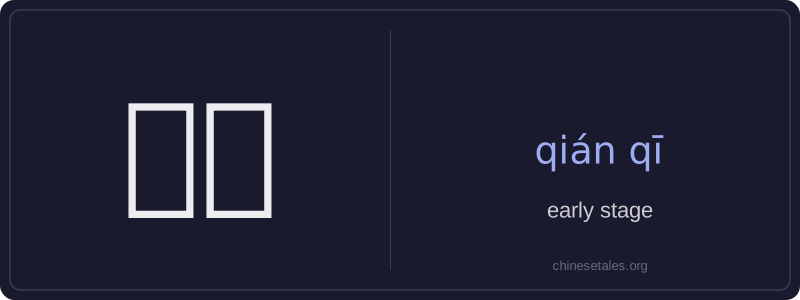
前期 literally means 'front period' — 前 (qián) means 'before' or 'front', and 期 (qī) means 'period', 'stage', or 'phase'. Together, they refer to the early or initial part of a process, project, development, or time span. It emphasizes the beginning portion before major activities or outcomes unfold.
This term is commonly used in formal, academic, business, or planning contexts — for example, when discussing project timelines, historical periods, disease progression, or life stages. Unlike casual terms like 开头 (kāitóu, 'beginning') or 一开始 (yī kāishǐ, 'at first'), 前期 carries a sense of structured division within a larger timeframe and often implies preparatory or foundational work. It frequently appears in compound phrases such as 前期准备 (qiánqī zhǔnbèi, 'preparatory work') or 前期调研 (qiánqī diàoyán, 'initial research').
Example Sentences
Related Words
见面
见面 literally means 'see face' — combining 见 (t
后来
Later (hòulái) is an adverb meaning 'afterwards'
背后
背后 literally means 'back + behind' and functions
我的
我的 (wǒ de) is a possessive pronoun meaning 'my'
这么
这么 (zhè me) is an adverb meaning 'so' or 'this
中学
'Zhōngxué' literally combines 'zhōng' (middle)
前面
前面 (qián miàn) literally combines 前 (qián, '
面条
‘面条’ (miàn tiáo) literally means ‘flour str