Word Explanation
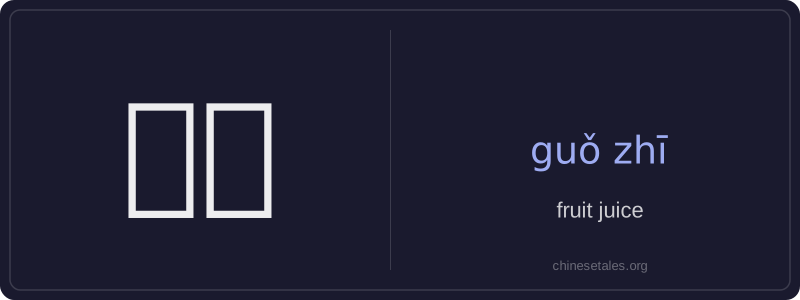
‘果汁’ (guǒ zhī) literally means ‘fruit juice’ — it’s a compound noun formed by combining 果 (guǒ), meaning ‘fruit’, and 汁 (zhī), meaning ‘juice’ or ‘sap’. Together, they refer specifically to the liquid extracted from fruits, whether freshly squeezed, pasteurized, or commercially bottled. Unlike generic terms like ‘drink’ or ‘beverage’, 果汁 emphasizes the natural fruit origin and is commonly used in dietary, culinary, and health-related contexts.
This word appears frequently in daily life — on supermarket labels, restaurant menus, nutrition advice, and children’s meal plans. It’s neutral in register (neither formal nor slang) and works in both spoken and written Chinese. Note that while some drinks contain fruit flavoring but little real fruit content, native speakers still call them 果汁 colloquially — though health-conscious contexts may specify ‘100% pure fruit juice’ (100% 纯果汁) to distinguish authenticity.
Example Sentences
Related Words
见面
见面 literally means 'see face' — combining 见 (t
后来
Later (hòulái) is an adverb meaning 'afterwards'
背后
背后 literally means 'back + behind' and functions
我的
我的 (wǒ de) is a possessive pronoun meaning 'my'
这么
这么 (zhè me) is an adverb meaning 'so' or 'this
中学
'Zhōngxué' literally combines 'zhōng' (middle)
前面
前面 (qián miàn) literally combines 前 (qián, '
面条
‘面条’ (miàn tiáo) literally means ‘flour str