Word Explanation
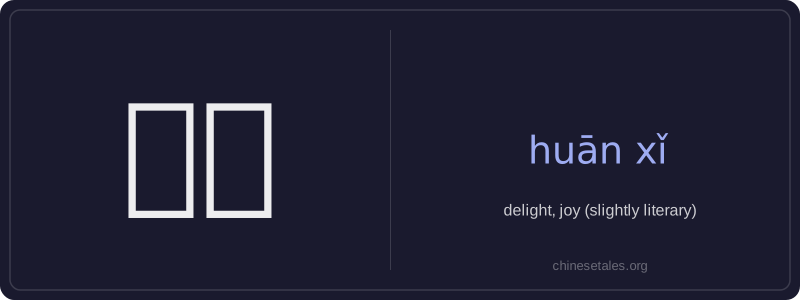
欢喜 (huān xǐ) is a compound word formed from two characters that both mean 'joy' or 'delight': 欢 (huān) conveys warmth, cheerfulness, and welcoming feeling, while 喜 (xǐ) emphasizes happiness, celebration, and auspiciousness. Together, they create a slightly literary, elegant term for deep, heartfelt joy — stronger and more refined than the everyday word 高兴 (gāo xìng). It often appears in classical texts, poetry, Buddhist contexts (e.g., 'giving rise to joy'), and formal or emotional speech.
The word functions flexibly as both a noun ('a feeling of delight') and an adjective ('delighted, overjoyed'). It’s commonly used with verbs like 有 (yǒu), 生 (shēng), or 表达 (biǎo dá), and frequently modified by adverbs like 十分 (shífēn) or 满心 (mǎnxīn). Unlike colloquial expressions, 欢喜 tends to avoid casual contractions and rarely appears in imperative or slang constructions.
Example Sentences
Related Words
见面
见面 literally means 'see face' — combining 见 (t
后来
Later (hòulái) is an adverb meaning 'afterwards'
背后
背后 literally means 'back + behind' and functions
我的
我的 (wǒ de) is a possessive pronoun meaning 'my'
这么
这么 (zhè me) is an adverb meaning 'so' or 'this
中学
'Zhōngxué' literally combines 'zhōng' (middle)
前面
前面 (qián miàn) literally combines 前 (qián, '
面条
‘面条’ (miàn tiáo) literally means ‘flour str