Word Explanation
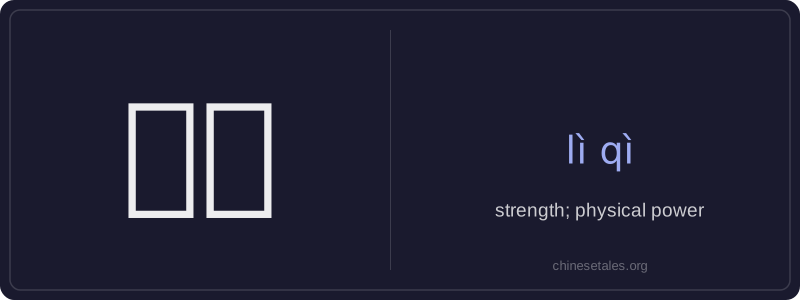
‘Lì qì’ literally combines ‘lì’ (force, strength) and ‘qì’ (vital energy, breath), forming a compound noun meaning physical strength or bodily power—the kind needed to lift, push, pull, or endure physical effort. It refers specifically to muscular or corporeal capacity, not mental or emotional energy (which would use terms like ‘jīng lì’ or ‘xīn lì’). Unlike abstract concepts of power, ‘lì qì’ is tangible and often discussed in contexts of health, labor, exercise, or aging.
The word is commonly used in everyday speech to describe someone’s capacity for physical work—e.g., a farmer needing ‘lì qì’ to plow fields, or an elderly person lamenting diminished ‘lì qì’. It can be modified by quantifiers like ‘yì diǎn’ (a bit), ‘hěn duō’ (a lot), or ‘bù shǎo’ (quite a bit), but not directly by adjectives like ‘strong’—those apply to the subject instead (e.g., ‘tā hěn yǒu lì qì’). It’s neutral in register and appropriate in both casual and formal settings.
Example Sentences
Related Words
见面
见面 literally means 'see face' — combining 见 (t
后来
Later (hòulái) is an adverb meaning 'afterwards'
背后
背后 literally means 'back + behind' and functions
我的
我的 (wǒ de) is a possessive pronoun meaning 'my'
这么
这么 (zhè me) is an adverb meaning 'so' or 'this
中学
'Zhōngxué' literally combines 'zhōng' (middle)
前面
前面 (qián miàn) literally combines 前 (qián, '
面条
‘面条’ (miàn tiáo) literally means ‘flour str