Word Explanation
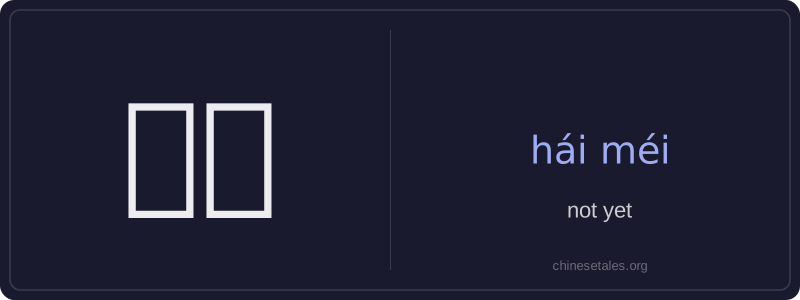
‘还没’ is an adverbial phrase meaning ‘not yet’ — it expresses that an expected or anticipated action or state has not occurred up to the present moment. The first character, 还 (hái), means ‘still’ or ‘yet’, while the second, 没 (méi), is the negative auxiliary used before verbs to indicate non-occurrence (not to be confused with 没有, which means ‘to not have’). Together, they form a fixed, inseparable unit that always precedes a verb or adjective and cannot stand alone as a sentence.
This phrase is extremely common in everyday spoken and written Chinese, especially when reporting delays, incomplete tasks, or ongoing expectations — such as waiting for someone, finishing homework, or receiving news. It carries a neutral, factual tone and is appropriate in both informal and formal contexts, though it’s more frequent in conversation than formal documents. Unlike English, ‘还没’ never appears at the end of a sentence; it must be followed directly by the verb or predicate it modifies.
Example Sentences
Related Words
见面
见面 literally means 'see face' — combining 见 (t
后来
Later (hòulái) is an adverb meaning 'afterwards'
背后
背后 literally means 'back + behind' and functions
我的
我的 (wǒ de) is a possessive pronoun meaning 'my'
这么
这么 (zhè me) is an adverb meaning 'so' or 'this
中学
'Zhōngxué' literally combines 'zhōng' (middle)
前面
前面 (qián miàn) literally combines 前 (qián, '
面条
‘面条’ (miàn tiáo) literally means ‘flour str