Word Explanation
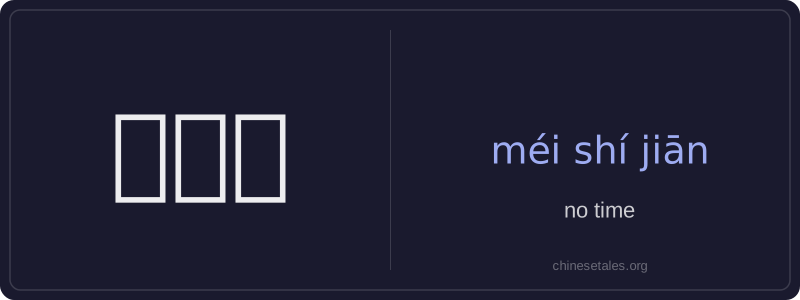
‘没时间’ literally means ‘not have time’ and functions as a common phrase expressing the absence of available time to do something. The character 没 (méi) is the negative verb meaning ‘to not have’, while 时 (shí) means ‘time’ and 间 (jiān) means ‘interval’ or ‘period’; together, 时 + 间 forms the compound noun ‘time’ (shíjiān). Though written as three characters, 没时间 functions as a fixed expression—never segmented in speech or writing.
This phrase is frequently used in informal spoken Chinese to politely decline invitations, explain delays, or justify inaction. It often appears at the end of a sentence (e.g., ‘我晚上去不了,没时间’) or as a standalone response (e.g., ‘去吃饭?——没时间!’). Unlike formal negation with 不 (bù), 没 is required here because it negates a state of possession (having time), not an action or quality.
Example Sentences
Related Words
见面
见面 literally means 'see face' — combining 见 (t
后来
Later (hòulái) is an adverb meaning 'afterwards'
背后
背后 literally means 'back + behind' and functions
我的
我的 (wǒ de) is a possessive pronoun meaning 'my'
这么
这么 (zhè me) is an adverb meaning 'so' or 'this
中学
'Zhōngxué' literally combines 'zhōng' (middle)
前面
前面 (qián miàn) literally combines 前 (qián, '
面条
‘面条’ (miàn tiáo) literally means ‘flour str