Word Explanation
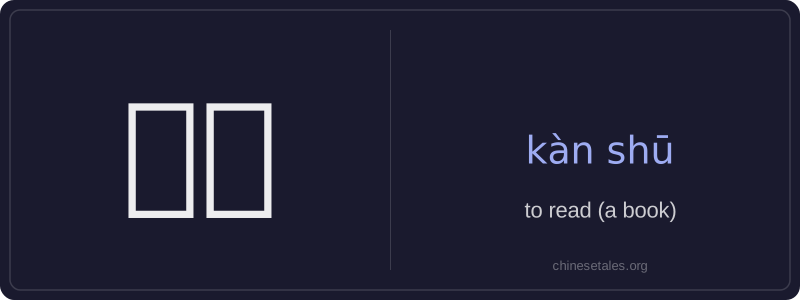
看书 (kàn shū) literally means 'to look at a book', but in modern Chinese it functions as the standard verb phrase for 'to read (a book)'. The character 看 (kàn) means 'to look' or 'to watch', and 书 (shū) means 'book'; together, they form a compound verb indicating the act of reading written material—not just glancing, but actively engaging with text. It is commonly used for leisure reading, studying, or any quiet, focused interaction with books.
This phrase is neutral in register and widely appropriate across contexts: students, professionals, and elders all use it naturally. Unlike English 'read', 看书 does not take an object marker (e.g., no 的 or 把), and it’s rarely used with measure words unless specifying quantity (e.g., 看一本书). It contrasts with broader terms like 阅读 (yuèdú), which is more formal and academic, and with listening-based activities like 听书 (tīng shū, 'to listen to audiobooks').
Example Sentences
Related Words
见面
见面 literally means 'see face' — combining 见 (t
后来
Later (hòulái) is an adverb meaning 'afterwards'
背后
背后 literally means 'back + behind' and functions
我的
我的 (wǒ de) is a possessive pronoun meaning 'my'
这么
这么 (zhè me) is an adverb meaning 'so' or 'this
中学
'Zhōngxué' literally combines 'zhōng' (middle)
前面
前面 (qián miàn) literally combines 前 (qián, '
面条
‘面条’ (miàn tiáo) literally means ‘flour str