Word Explanation
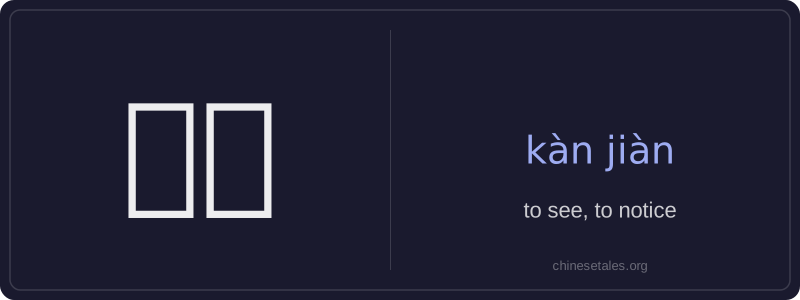
‘看见’ (kàn jiàn) is a compound verb meaning ‘to see’ or ‘to notice’—emphasizing the successful completion of the act of seeing. While 看 (kàn) alone means ‘to look’ or ‘to watch’, adding 见 (jiàn), which means ‘to meet’ or ‘to encounter’, transforms it into a resultative verb indicating that the visual perception was achieved: literally ‘to look and thereby see’. It’s commonly used in everyday spoken and written Chinese when confirming that something entered one’s field of vision or was perceived intentionally.
This verb often appears with time or aspect particles like 了 (le) to mark completion (e.g., 我看见了), and can take objects directly without prepositions—unlike English, where ‘see’ may require context to imply directness. It’s neutral in register and appropriate for both casual and formal situations, though it carries no emotional connotation unless modified by adverbs or context (e.g., 突然看见 ‘suddenly see’).
Example Sentences
Related Words
见面
见面 literally means 'see face' — combining 见 (t
后来
Later (hòulái) is an adverb meaning 'afterwards'
背后
背后 literally means 'back + behind' and functions
我的
我的 (wǒ de) is a possessive pronoun meaning 'my'
这么
这么 (zhè me) is an adverb meaning 'so' or 'this
中学
'Zhōngxué' literally combines 'zhōng' (middle)
前面
前面 (qián miàn) literally combines 前 (qián, '
面条
‘面条’ (miàn tiáo) literally means ‘flour str