Word Explanation
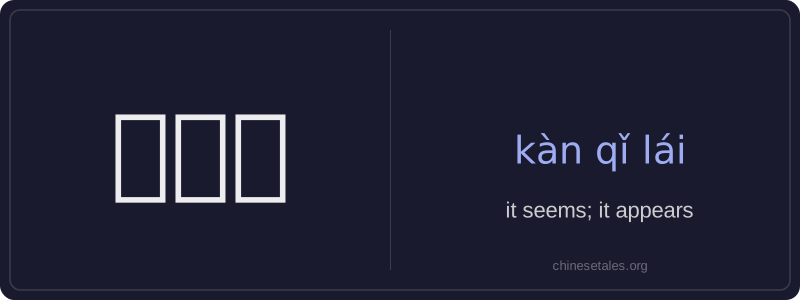
看起来 is a common verb phrase meaning 'it seems' or 'it appears', used to express an impression or judgment based on observable evidence — not certainty, but what one perceives visually or contextually. The three characters combine literally as 'look + begin/commence + come': 起来 functions here as a resultative complement indicating the emergence of a state, so the whole phrase conveys that a certain appearance or impression has 'come into view' or 'arises from observation'.
This phrase always follows a subject (often a noun or pronoun) and typically precedes an adjective or clause describing the perceived state. It’s neutral in register — widely used in both spoken and written Chinese — and frequently appears in everyday conversations about people’s moods, weather, situations, or objects’ conditions. Unlike standalone verbs, 看起来 cannot take aspect markers like 了 or 过 directly; instead, aspect is marked on the predicate that follows it.
Example Sentences
Related Words
见面
见面 literally means 'see face' — combining 见 (t
后来
Later (hòulái) is an adverb meaning 'afterwards'
背后
背后 literally means 'back + behind' and functions
我的
我的 (wǒ de) is a possessive pronoun meaning 'my'
这么
这么 (zhè me) is an adverb meaning 'so' or 'this
中学
'Zhōngxué' literally combines 'zhōng' (middle)
前面
前面 (qián miàn) literally combines 前 (qián, '
面条
‘面条’ (miàn tiáo) literally means ‘flour str