Word Explanation
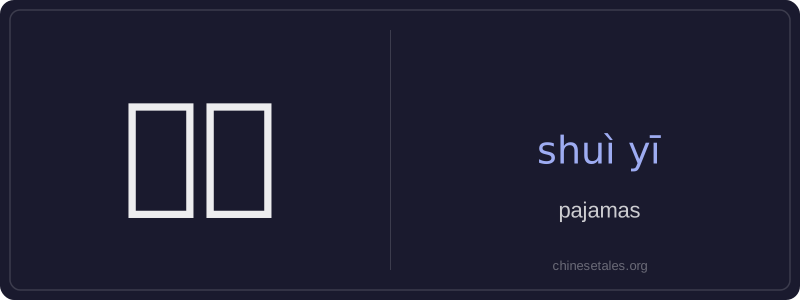
睡衣 (shuì yī) literally means 'sleep clothing' — the character 睡 (shuì) means 'to sleep', and 衣 (yī) means 'clothing' or 'garment'. Together, they form a compound noun referring specifically to garments worn for sleeping or relaxing at home. Unlike Western English, which often uses plural 'pajamas', Chinese treats 睡衣 as an uncountable noun; you say 一套睡衣 (yī tào shuì yī, 'a set of pajamas') to indicate one complete outfit.
睡衣 is commonly used in contexts related to bedtime routines, home comfort, or personal hygiene. It can refer to matching sets (top and bottom), nightgowns, or even loungewear that blurs the line between sleepwear and casual wear. While traditionally associated with nighttime use, modern usage sometimes includes lightweight 睡衣 worn during daytime naps or while recovering from illness. The term carries a neutral, everyday register — appropriate in both spoken and written Chinese, from family conversations to product labels.
Example Sentences
Related Words
见面
见面 literally means 'see face' — combining 见 (t
后来
Later (hòulái) is an adverb meaning 'afterwards'
背后
背后 literally means 'back + behind' and functions
我的
我的 (wǒ de) is a possessive pronoun meaning 'my'
这么
这么 (zhè me) is an adverb meaning 'so' or 'this
中学
'Zhōngxué' literally combines 'zhōng' (middle)
前面
前面 (qián miàn) literally combines 前 (qián, '
面条
‘面条’ (miàn tiáo) literally means ‘flour str