Word Explanation
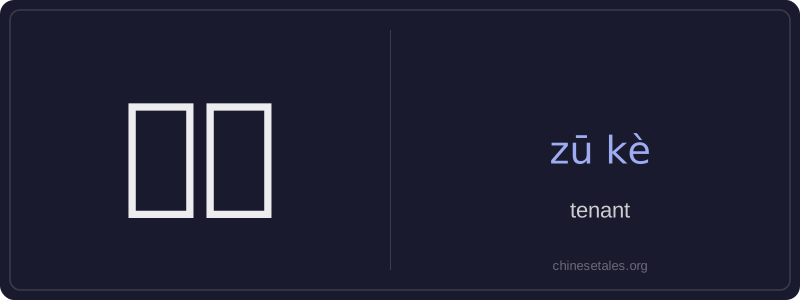
'租客' (zū kè) is a compound noun meaning 'tenant' — a person who rents and lives in or uses a property owned by someone else. The first character, 租 (zū), means 'to rent' or 'to lease', indicating a temporary, paid usage arrangement. The second character, 客 (kè), literally means 'guest' or 'visitor', but here it carries the sense of 'a person associated with a place or service', similar to how it appears in words like 顾客 (gùkè, 'customer') or 房客 (fángkè, 'lodger'). Together, 租客 emphasizes the contractual, non-ownership relationship between the occupant and the property.
This term is commonly used in urban housing contexts, rental agreements, real estate listings, and landlord-tenant discussions. It’s neutral in register — appropriate for formal documents, news reports, and everyday conversation. Unlike 房客 (fángkè), which often implies short-term or informal lodging, 租客 typically refers to someone under a formal rental contract, especially for apartments or commercial spaces.
Example Sentences
Related Words
见面
见面 literally means 'see face' — combining 见 (t
后来
Later (hòulái) is an adverb meaning 'afterwards'
背后
背后 literally means 'back + behind' and functions
我的
我的 (wǒ de) is a possessive pronoun meaning 'my'
这么
这么 (zhè me) is an adverb meaning 'so' or 'this
中学
'Zhōngxué' literally combines 'zhōng' (middle)
前面
前面 (qián miàn) literally combines 前 (qián, '
面条
‘面条’ (miàn tiáo) literally means ‘flour str