Word Explanation
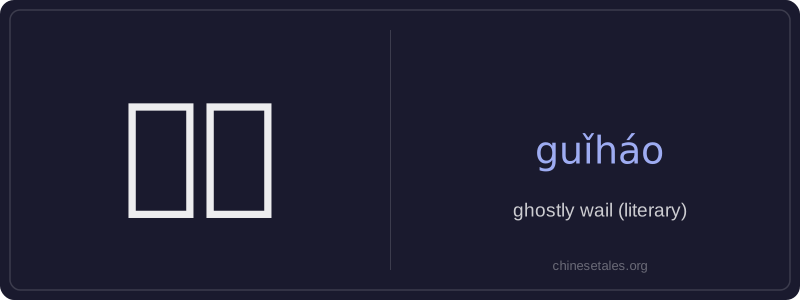
‘鬼号’ (guǐháo) is a literary, vivid noun meaning ‘ghostly wail’—a piercing, eerie cry that evokes the sound of a ghost or spirit wailing in the night. The first character 鬼 (guǐ) means ‘ghost’ or ‘spirit’, carrying connotations of the supernatural, fear, or the unseen; the second character 号 (háo) is the verb ‘to howl’ or ‘to wail’, used here as a noun stem to denote the sound itself. Together, they form a compound that emphasizes both origin (supernatural) and quality (shrill, mournful, unsettling).
This term appears almost exclusively in descriptive writing—classical poetry, modern literary fiction, or atmospheric storytelling—to intensify mood, suggest haunting loneliness, or signal danger or foreboding. It is rarely used in spoken Mandarin or neutral contexts; instead, it belongs to elevated, expressive diction. While 号 can mean ‘to shout’ or ‘to call’ in other compounds (e.g., 呼号 hūháo), in 鬼号 the tone is distinctly mournful and spectral—not angry or urgent, but chillingly sorrowful.
Example Sentences
Related Words
见面
见面 literally means 'see face' — combining 见 (t
后来
Later (hòulái) is an adverb meaning 'afterwards'
背后
背后 literally means 'back + behind' and functions
我的
我的 (wǒ de) is a possessive pronoun meaning 'my'
这么
这么 (zhè me) is an adverb meaning 'so' or 'this
中学
'Zhōngxué' literally combines 'zhōng' (middle)
前面
前面 (qián miàn) literally combines 前 (qián, '
面条
‘面条’ (miàn tiáo) literally means ‘flour str