Word Explanation
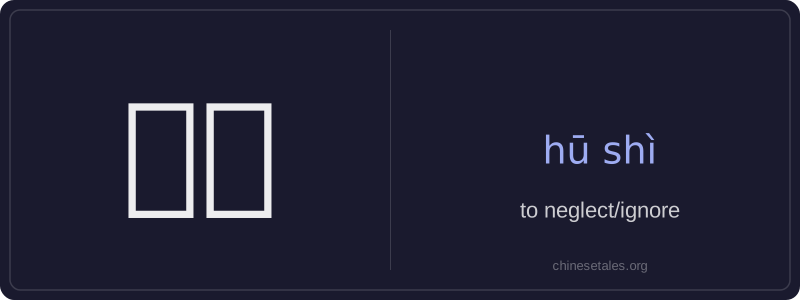
忽视 (hū shì) is a verb meaning 'to neglect' or 'to ignore', often with a sense of careless inattention or failure to give something the importance it deserves. The character 忽 (hū) conveys suddenness or carelessness, while 视 (shì) means 'to look at' or 'to regard'. Together, they suggest looking at something but failing to truly see or act on it — like glancing past an issue without responding. It implies a lapse in responsibility or awareness, not just passive unawareness.
This word is commonly used in formal or serious contexts: public health campaigns warn against neglecting symptoms (e.g., ignoring early signs of illness), educators caution against overlooking students’ emotional needs, and managers are urged not to disregard safety protocols. It carries mild negative judgment — using 忽视 suggests the neglect was avoidable and potentially harmful. It’s rarely used for trivial oversights; instead, it points to consequential omissions in duty, care, or judgment.
Example Sentences
Related Words
见面
见面 literally means 'see face' — combining 见 (t
后来
Later (hòulái) is an adverb meaning 'afterwards'
背后
背后 literally means 'back + behind' and functions
我的
我的 (wǒ de) is a possessive pronoun meaning 'my'
这么
这么 (zhè me) is an adverb meaning 'so' or 'this
中学
'Zhōngxué' literally combines 'zhōng' (middle)
前面
前面 (qián miàn) literally combines 前 (qián, '
面条
‘面条’ (miàn tiáo) literally means ‘flour str