Word Explanation
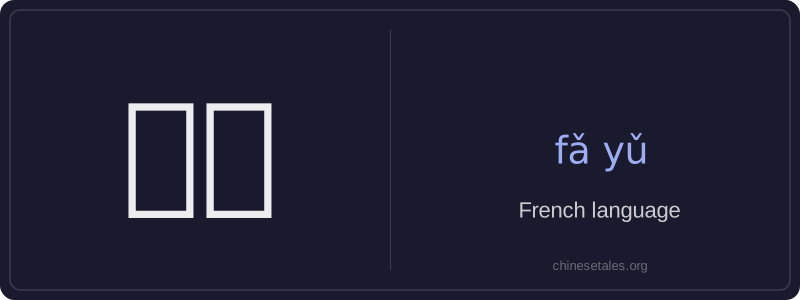
‘法语’ literally means ‘French language’ — ‘法’ (fǎ) is short for ‘法国’ (Fǎguó), the Chinese name for France, and ‘语’ (yǔ) means ‘language’ or ‘speech’. Together, they form a compound noun referring specifically to the official language of France and several other countries, including Canada (Quebec), Belgium, Switzerland, and many African nations. It is one of the six official languages of the United Nations.
In Chinese, ‘法语’ is used in academic, travel, and professional contexts — for example, when discussing language study, international diplomacy, or cultural exchange. Unlike English, which uses the adjective ‘French’ before ‘language’, Chinese places the country name first, followed directly by ‘语’, a productive pattern also seen in ‘英语’ (English), ‘日语’ (Japanese), and ‘德语’ (German). It is always treated as an uncountable noun and does not take measure words like ‘个’ in neutral usage.
Example Sentences
Related Words
见面
见面 literally means 'see face' — combining 见 (t
后来
Later (hòulái) is an adverb meaning 'afterwards'
背后
背后 literally means 'back + behind' and functions
我的
我的 (wǒ de) is a possessive pronoun meaning 'my'
这么
这么 (zhè me) is an adverb meaning 'so' or 'this
中学
'Zhōngxué' literally combines 'zhōng' (middle)
前面
前面 (qián miàn) literally combines 前 (qián, '
面条
‘面条’ (miàn tiáo) literally means ‘flour str