Word Explanation
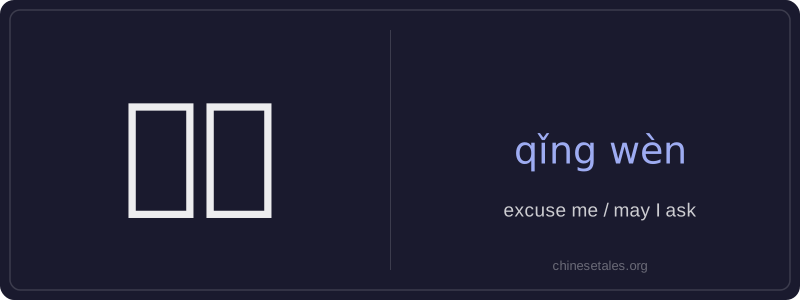
‘请问’ is a polite, formal expression used to introduce a question—similar to 'excuse me' or 'may I ask' in English. It combines the verb 请 (qǐng), meaning 'to request' or 'please', and the verb 问 (wèn), meaning 'to ask'. Together, they form a courteous phrase that signals respect and softens the act of questioning, especially when speaking to strangers, elders, or authority figures.
This phrase is commonly used in daily interactions: asking for directions, confirming information at a store or office, or beginning a conversation with someone you don’t know well. It’s never used in isolation as a complete sentence—it always precedes a question (e.g., 请问…在哪里?or 请问几点了?). Unlike casual alternatives like ‘喂’ or ‘你好’, 请问 carries clear deference and is expected in service contexts, public settings, or written communication like emails and forms.
Example Sentences
Related Words
见面
见面 literally means 'see face' — combining 见 (t
后来
Later (hòulái) is an adverb meaning 'afterwards'
背后
背后 literally means 'back + behind' and functions
我的
我的 (wǒ de) is a possessive pronoun meaning 'my'
这么
这么 (zhè me) is an adverb meaning 'so' or 'this
中学
'Zhōngxué' literally combines 'zhōng' (middle)
前面
前面 (qián miàn) literally combines 前 (qián, '
面条
‘面条’ (miàn tiáo) literally means ‘flour str