Word Explanation
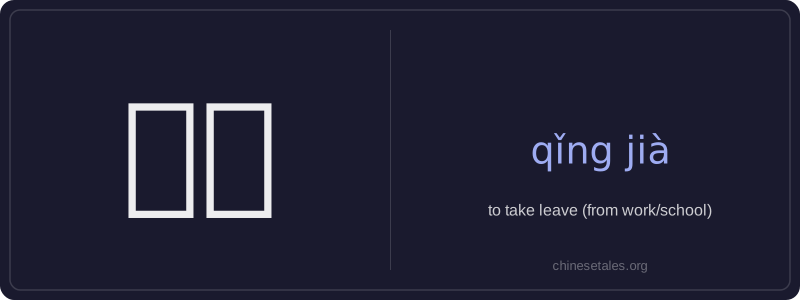
请假 (qǐng jià) is a verb meaning 'to take leave' — typically from work, school, or other formal obligations. The first character 请 (qǐng) means 'to request' or 'to ask for', while the second character 假 (jià) means 'leave' or 'holiday'. Together, they literally mean 'to request leave', emphasizing the formal, polite nature of the action. It’s commonly used in professional and academic settings when seeking permission to be absent.
This term implies official approval is needed: one doesn’t simply skip class or work — one must submit a request and receive consent. It’s neutral in register but leans formal; you’d use it with teachers, supervisors, or HR, not casually among friends. While 假 can stand alone as a noun (e.g., 放假 fàng jià — 'to have a holiday'), 请假 always functions as a verb requiring an agent performing the action — usually followed by time duration (e.g., 请三天假) or reason (e.g., 因病请假).
Example Sentences
Related Words
见面
见面 literally means 'see face' — combining 见 (t
后来
Later (hòulái) is an adverb meaning 'afterwards'
背后
背后 literally means 'back + behind' and functions
我的
我的 (wǒ de) is a possessive pronoun meaning 'my'
这么
这么 (zhè me) is an adverb meaning 'so' or 'this
中学
'Zhōngxué' literally combines 'zhōng' (middle)
前面
前面 (qián miàn) literally combines 前 (qián, '
面条
‘面条’ (miàn tiáo) literally means ‘flour str