Word Explanation
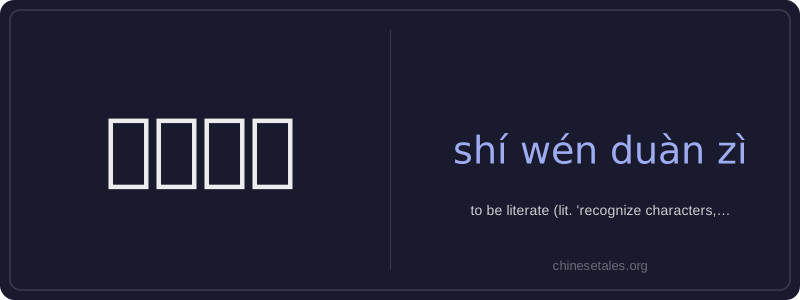
'Shí wén duàn zì' literally means 'recognize characters, segment text' — referring to the foundational skills of reading: identifying individual Chinese characters (识文) and parsing written language into meaningful units like words or phrases (断字). Historically, this phrase described basic literacy in pre-modern China, where formal education was limited and being able to read even simple texts was a mark of learning and social standing.
Today it’s used mostly in descriptive, slightly literary or nostalgic contexts — often to highlight someone’s educational background, or contrast literacy with illiteracy. It carries a warm, respectful connotation, sometimes implying modest but functional literacy rather than scholarly expertise. You’ll hear it in biographical sketches, oral histories, or discussions about rural education, rarely in technical or academic writing.
Example Sentences
Related Words
见面
见面 literally means 'see face' — combining 见 (t
后来
Later (hòulái) is an adverb meaning 'afterwards'
背后
背后 literally means 'back + behind' and functions
我的
我的 (wǒ de) is a possessive pronoun meaning 'my'
这么
这么 (zhè me) is an adverb meaning 'so' or 'this
中学
'Zhōngxué' literally combines 'zhōng' (middle)
前面
前面 (qián miàn) literally combines 前 (qián, '
面条
‘面条’ (miàn tiáo) literally means ‘flour str