Word Explanation
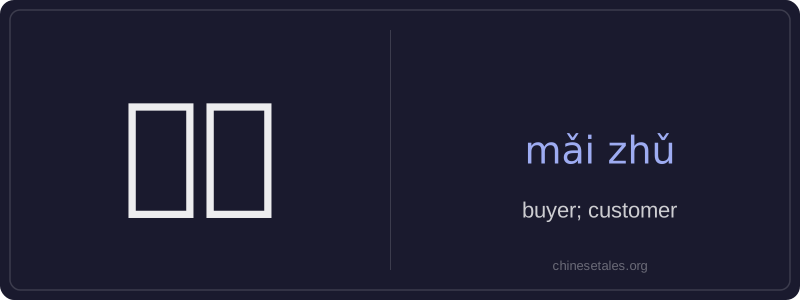
‘买主’ (mǎi zhǔ) is a compound noun meaning ‘buyer’ or ‘customer’—the person who purchases something. It combines two characters: 买 (mǎi), meaning ‘to buy’, and 主 (zhǔ), meaning ‘master’, ‘owner’, or ‘principal’. Together, they literally convey ‘the master of the buying act’—i.e., the one initiating and completing the purchase. This term emphasizes agency and role rather than relationship, making it more neutral and transactional than terms like 顾客 (gùkè, ‘customer’) which implies service context.
‘买主’ is commonly used in everyday commerce—especially when discussing sales, negotiations, or ownership transfer. It appears frequently in real estate, second-hand markets, and informal business talk. Unlike 买家 (mǎijiā), which is slightly more formal and often used in written contracts or online platforms, 买主 carries a mildly colloquial, grounded tone and is preferred in spoken descriptions of who bought what and under what conditions.
Example Sentences
Related Words
见面
见面 literally means 'see face' — combining 见 (t
后来
Later (hòulái) is an adverb meaning 'afterwards'
背后
背后 literally means 'back + behind' and functions
我的
我的 (wǒ de) is a possessive pronoun meaning 'my'
这么
这么 (zhè me) is an adverb meaning 'so' or 'this
中学
'Zhōngxué' literally combines 'zhōng' (middle)
前面
前面 (qián miàn) literally combines 前 (qián, '
面条
‘面条’ (miàn tiáo) literally means ‘flour str