Word Explanation
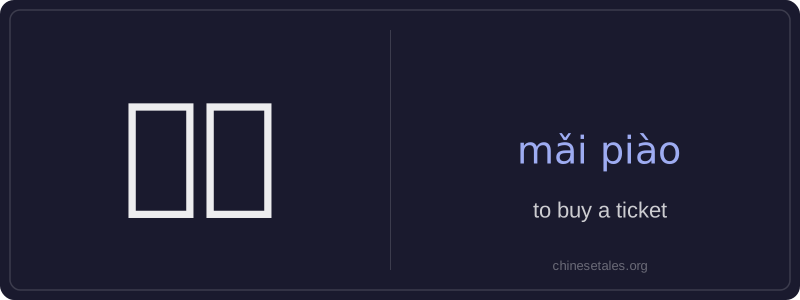
'Buy a ticket' is a compound verb formed by combining 买 (mǎi), meaning 'to buy', and 票 (piào), meaning 'ticket'. Together, they describe the action of purchasing admission, transportation, or event tickets — such as for buses, trains, movies, concerts, or museums. The structure follows the standard Chinese verb–object pattern, with no particles required.
This phrase is commonly used in daily life when traveling, attending cultural events, or accessing public services. It’s neutral in register — appropriate for both casual conversation and formal settings like ticket counters or online booking interfaces. Unlike some verbs, 买票 doesn’t require aspect markers (e.g., 了 or 过) unless indicating completion or experience, but these are optional depending on context.
Example Sentences
Related Words
见面
见面 literally means 'see face' — combining 见 (t
后来
Later (hòulái) is an adverb meaning 'afterwards'
背后
背后 literally means 'back + behind' and functions
我的
我的 (wǒ de) is a possessive pronoun meaning 'my'
这么
这么 (zhè me) is an adverb meaning 'so' or 'this
中学
'Zhōngxué' literally combines 'zhōng' (middle)
前面
前面 (qián miàn) literally combines 前 (qián, '
面条
‘面条’ (miàn tiáo) literally means ‘flour str