Word Explanation
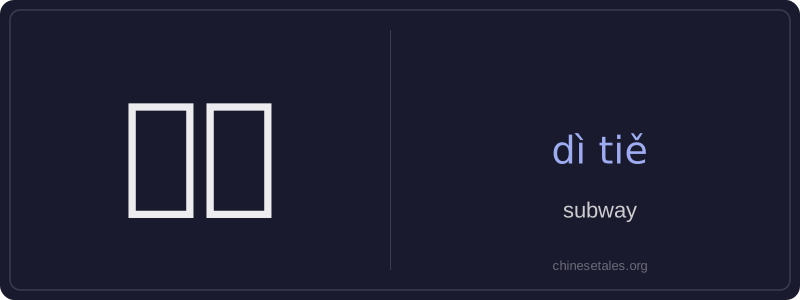
地铁 (dì tiě) literally means 'earth iron'—a compound of 地 (dì, 'earth' or 'ground') and 铁 (tiě, 'iron')—reflecting its origin as an underground railway system built with iron rails. It refers specifically to a high-capacity urban rail transit system that runs primarily underground in cities, though some sections may be elevated or at ground level. In everyday Chinese, 地铁 is the standard, neutral term for 'subway' or 'metro' and is used across mainland China, Taiwan, and Singapore.
This word is essential for navigating modern Chinese cities. Unlike older terms like 火车 (huǒ chē, 'train'), which refers to conventional or long-distance rail, 地铁 emphasizes speed, frequency, and integration into city life—often serving as the backbone of daily commuting. It’s commonly paired with station names (e.g., 西直门地铁站), line numbers (e.g., 10号线), or verbs like 乘 (chéng, 'to take') or 搭 (dā, 'to board').
Example Sentences
Related Words
见面
见面 literally means 'see face' — combining 见 (t
后来
Later (hòulái) is an adverb meaning 'afterwards'
背后
背后 literally means 'back + behind' and functions
我的
我的 (wǒ de) is a possessive pronoun meaning 'my'
这么
这么 (zhè me) is an adverb meaning 'so' or 'this
中学
'Zhōngxué' literally combines 'zhōng' (middle)
前面
前面 (qián miàn) literally combines 前 (qián, '
面条
‘面条’ (miàn tiáo) literally means ‘flour str