Word Explanation
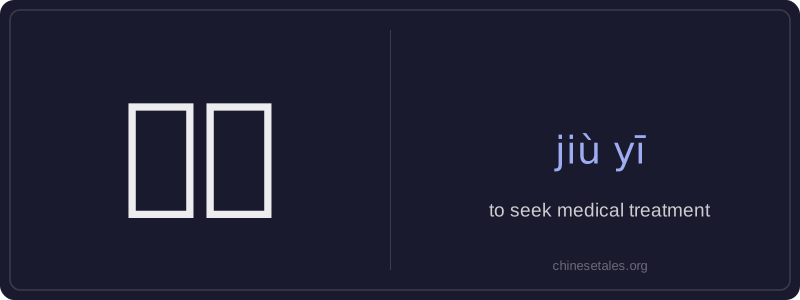
就医 (jiù yī) literally means 'to approach medicine' — 就 (jiù) conveys the idea of 'going to', 'approaching', or 'resorting to', while 医 (yī) means 'medicine' or 'medical treatment'. Together, they form a formal, standard verb meaning 'to seek medical treatment' or 'to go to a hospital/clinic for care'. It emphasizes the action of visiting a healthcare provider for diagnosis or treatment, not just feeling unwell.
This term is commonly used in written Chinese, official documents, news reports, and polite spoken contexts — for example, when describing someone’s health journey, insurance coverage, or public health policies. It’s more formal than colloquial alternatives like '看病' (kàn bìng), and it rarely appears in casual daily chat among friends. 就医 is typically followed by location phrases (e.g., 去医院就医) or time markers (e.g., 昨天就医), but does not take direct objects — you don’t 'seek treatment *something*', only *at* a place or *for* a condition (implied).
Example Sentences
Related Words
见面
见面 literally means 'see face' — combining 见 (t
后来
Later (hòulái) is an adverb meaning 'afterwards'
背后
背后 literally means 'back + behind' and functions
我的
我的 (wǒ de) is a possessive pronoun meaning 'my'
这么
这么 (zhè me) is an adverb meaning 'so' or 'this
中学
'Zhōngxué' literally combines 'zhōng' (middle)
前面
前面 (qián miàn) literally combines 前 (qián, '
面条
‘面条’ (miàn tiáo) literally means ‘flour str