Word Explanation
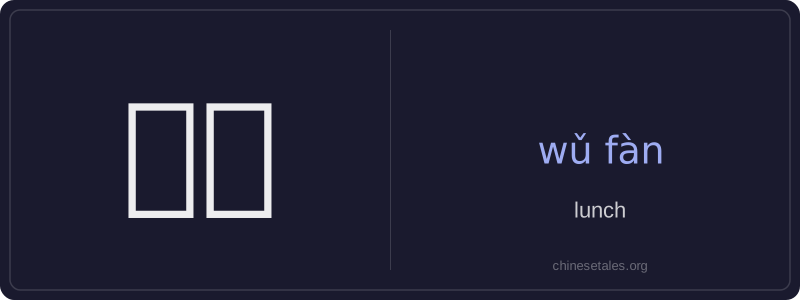
‘Wǔfàn’ literally means ‘noon meal’ — 午 (wǔ) refers to the hour of noon (11 a.m. to 1 p.m. in traditional Chinese timekeeping), and 饭 (fàn) means ‘cooked rice’ or more generally ‘meal’. Together, they form the standard, neutral term for ‘lunch’ in Mandarin — the main midday meal eaten between roughly 11:30 a.m. and 2 p.m. It’s used in everyday conversation, work settings, schools, and family life, and carries no special formality or informality.
Unlike English, where ‘lunch’ can sometimes imply a light meal, wǔfàn in Chinese typically denotes a substantial, balanced meal — often including rice, vegetables, protein, and soup. It’s commonly paired with time expressions (e.g., 吃午饭, ‘to eat lunch’) or location phrases (e.g., 在公司吃午饭, ‘eat lunch at the office’). The word appears frequently in schedules, invitations, and daily planning, reflecting its central role in the rhythm of daily life.
Example Sentences
Related Words
见面
见面 literally means 'see face' — combining 见 (t
后来
Later (hòulái) is an adverb meaning 'afterwards'
背后
背后 literally means 'back + behind' and functions
我的
我的 (wǒ de) is a possessive pronoun meaning 'my'
这么
这么 (zhè me) is an adverb meaning 'so' or 'this
中学
'Zhōngxué' literally combines 'zhōng' (middle)
前面
前面 (qián miàn) literally combines 前 (qián, '
面条
‘面条’ (miàn tiáo) literally means ‘flour str