Word Explanation
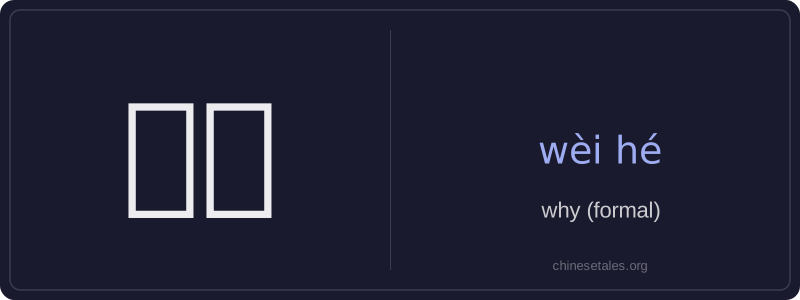
为何 (wèi hé) is a formal, literary way to ask 'why' in Chinese. It literally combines 为 (wèi), meaning 'for' or 'because of', and 何 (hé), an archaic interrogative pronoun meaning 'what' or 'which'. Together, they form a classical construction equivalent to 'for what [reason]?' — the closest English parallel being the old-fashioned 'wherefore' (as in Shakespeare’s 'Wherefore art thou Romeo?').
This term appears frequently in written Chinese — such as essays, news reports, academic writing, and formal speeches — but is rare in casual spoken conversation. Native speakers typically use 为什么 (wèi shén me) in everyday speech instead. 为何 carries a tone of gravity, reflection, or rhetorical emphasis, often implying deeper inquiry into motivation, cause, or principle rather than simple factual explanation.
Example Sentences
Related Words
见面
见面 literally means 'see face' — combining 见 (t
后来
Later (hòulái) is an adverb meaning 'afterwards'
背后
背后 literally means 'back + behind' and functions
我的
我的 (wǒ de) is a possessive pronoun meaning 'my'
这么
这么 (zhè me) is an adverb meaning 'so' or 'this
中学
'Zhōngxué' literally combines 'zhōng' (middle)
前面
前面 (qián miàn) literally combines 前 (qián, '
面条
‘面条’ (miàn tiáo) literally means ‘flour str