Word Explanation
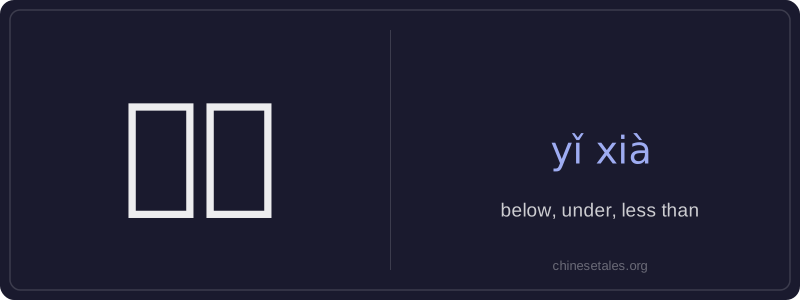
以下 (yǐ xià) literally combines 以 (yǐ, 'by' or 'with') and 下 (xià, 'below' or 'under'), forming a compound meaning 'below', 'under', or 'less than'. As a preposition, it introduces content that follows — like items listed after a heading, text appearing later in a document, or conditions stated afterward. It's frequently used in formal writing, instructions, emails, and official documents to refer to what comes next.
As a noun, 以下 means 'the following [things]' — for example, 'the following points' or 'the items below'. It often appears with classifiers (e.g., 以下内容, 以下人员). Unlike English 'below', 以下 rarely refers to physical position; it’s almost always abstract or textual. It can also express quantity limits: 30岁以下 means 'under 30 years old', where it functions like 'less than' with numbers and measures.
Example Sentences
Related Words
见面
见面 literally means 'see face' — combining 见 (t
后来
Later (hòulái) is an adverb meaning 'afterwards'
背后
背后 literally means 'back + behind' and functions
我的
我的 (wǒ de) is a possessive pronoun meaning 'my'
这么
这么 (zhè me) is an adverb meaning 'so' or 'this
中学
'Zhōngxué' literally combines 'zhōng' (middle)
前面
前面 (qián miàn) literally combines 前 (qián, '
面条
‘面条’ (miàn tiáo) literally means ‘flour str