Word Explanation
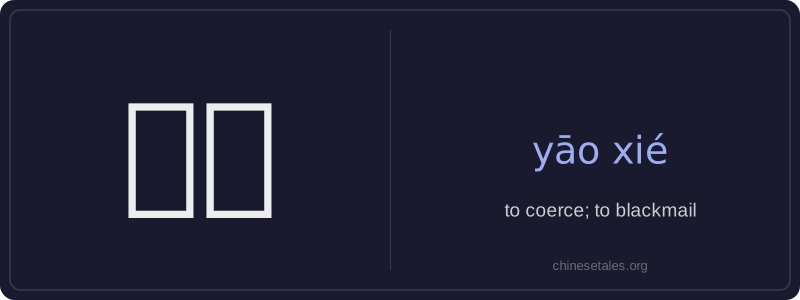
要挟 is a transitive verb meaning 'to coerce' or 'to blackmail'—using threats, pressure, or intimidation to force someone to act against their will. The character 要 (yāo) here carries the sense of 'to demand' or 'to require', while 挟 (xié) means 'to hold by force' or 'to take advantage of', often implying physical or psychological leverage. Together, they convey the idea of seizing control through threat, not persuasion or negotiation.
This word is commonly used in formal and serious contexts—such as legal reports, news articles, or discussions about power imbalances—and carries strong negative connotations. It implies an abuse of power or vulnerability (e.g., threatening to expose secrets, harm reputation, or cause physical danger). Unlike milder terms like 'persuade' or 'urge', 要挟 always involves coercion with high stakes and moral disapproval.
Example Sentences
Related Words
中学
'Zhōngxué' literally combines 'zhōng' (middle)
见面
见面 literally means 'see face' — combining 见 (t
后来
Later (hòulái) is an adverb meaning 'afterwards'
背后
背后 literally means 'back + behind' and functions
我的
我的 (wǒ de) is a possessive pronoun meaning 'my'
这么
这么 (zhè me) is an adverb meaning 'so' or 'this
前面
前面 (qián miàn) literally combines 前 (qián, '
面条
‘面条’ (miàn tiáo) literally means ‘flour str