Word Explanation
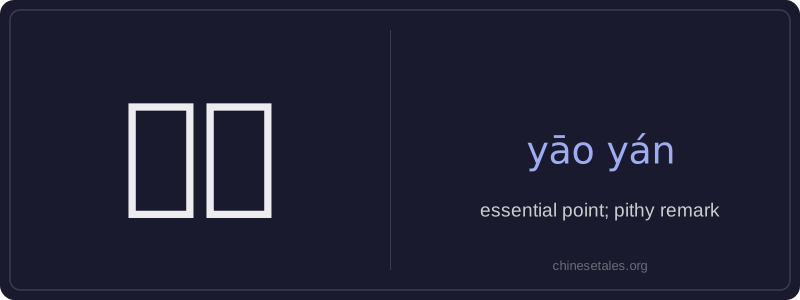
要言 (yāo yán) literally combines 要 (yāo), meaning 'essential' or 'crucial', and 言 (yán), meaning 'words' or 'speech'. Together, it refers to a concise, insightful statement that captures the core idea or most important point of a matter—often with wisdom, clarity, and economy of language. It is not merely any short remark, but one that carries weight, depth, or enduring truth.
This term appears frequently in classical and formal modern Chinese—especially in essays, speeches, commentary, or summaries—where distilling complexity into a few potent words is valued. While it can describe a wise saying or maxim, it’s more often used attributively (e.g., 要言不烦, 'essential words without redundancy') or in contexts praising rhetorical precision. It carries a slightly literary or elevated register, rarely used in casual daily talk.
Example Sentences
Related Words
中学
'Zhōngxué' literally combines 'zhōng' (middle)
见面
见面 literally means 'see face' — combining 见 (t
后来
Later (hòulái) is an adverb meaning 'afterwards'
背后
背后 literally means 'back + behind' and functions
我的
我的 (wǒ de) is a possessive pronoun meaning 'my'
这么
这么 (zhè me) is an adverb meaning 'so' or 'this
前面
前面 (qián miàn) literally combines 前 (qián, '
面条
‘面条’ (miàn tiáo) literally means ‘flour str