Word Explanation
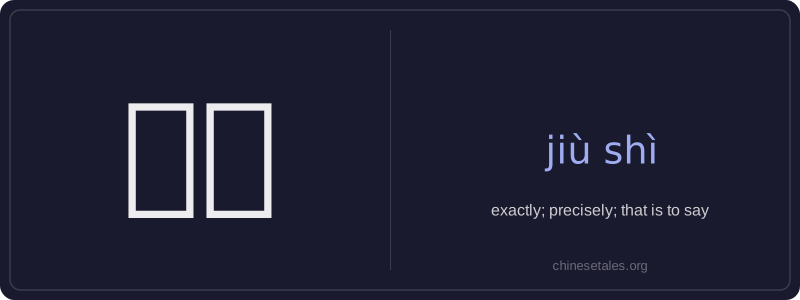
就是 is a versatile two-character expression that functions primarily as a conjunction or adverb, emphasizing precision, confirmation, or clarification. Literally, 就 means 'just' or 'exactly', and 是 means 'is' or 'to be'; together, they form a cohesive unit meaning 'exactly', 'precisely', or 'that is to say'. It’s commonly used to reinforce identity, definition, or agreement — for example, when confirming someone’s identity ('That person? That is exactly the teacher I mentioned') or clarifying a point ('It’s not complicated — it’s simply this').
The phrase often appears in spoken Mandarin to add emphasis or resolve ambiguity, especially after a noun, pronoun, or clause. It frequently follows demonstratives (like 这、那) or questions (like 谁、什么), and can introduce explanations or corrections. Unlike standalone 是, 就是 adds nuance of certainty and immediacy — not just stating a fact, but asserting it with confidence or finality. It’s neutral in register and widely used across contexts from casual conversation to formal explanation.
Example Sentences
Related Words
中学
'Zhōngxué' literally combines 'zhōng' (middle)
见面
见面 literally means 'see face' — combining 见 (t
后来
Later (hòulái) is an adverb meaning 'afterwards'
背后
背后 literally means 'back + behind' and functions
我的
我的 (wǒ de) is a possessive pronoun meaning 'my'
这么
这么 (zhè me) is an adverb meaning 'so' or 'this
前面
前面 (qián miàn) literally combines 前 (qián, '
面条
‘面条’ (miàn tiáo) literally means ‘flour str