Word Explanation
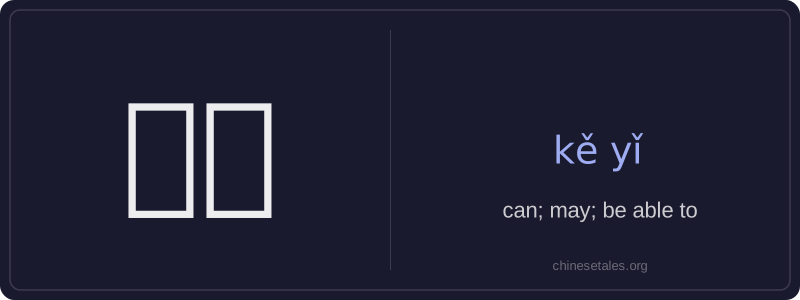
'可以' (kě yǐ) is a modal verb expressing ability, permission, or possibility — equivalent to 'can', 'may', or 'be able to'. The character 可 means 'acceptable' or 'feasible', and 以 originally meant 'to use' or 'by means of'; together, they convey the idea of something being feasible or permissible under given conditions. Unlike English 'can', which often implies physical ability, '可以' frequently signals social permission or practical possibility — for example, asking if an action is allowed or whether something is viable.
This word appears in questions ('我可以...?'), statements ('你可以...'), and negatives ('不可以'). It's neutral in register — used in both casual speech and formal writing — and commonly follows subjects directly without additional auxiliaries. It does not conjugate for tense or person, and its meaning relies heavily on context: '我可以喝水' could mean 'I’m allowed to drink water' or 'I’m able to drink water', depending on situation.
Example Sentences
Related Words
中学
'Zhōngxué' literally combines 'zhōng' (middle)
见面
见面 literally means 'see face' — combining 见 (t
后来
Later (hòulái) is an adverb meaning 'afterwards'
背后
背后 literally means 'back + behind' and functions
我的
我的 (wǒ de) is a possessive pronoun meaning 'my'
这么
这么 (zhè me) is an adverb meaning 'so' or 'this
前面
前面 (qián miàn) literally combines 前 (qián, '
面条
‘面条’ (miàn tiáo) literally means ‘flour str