Word Explanation
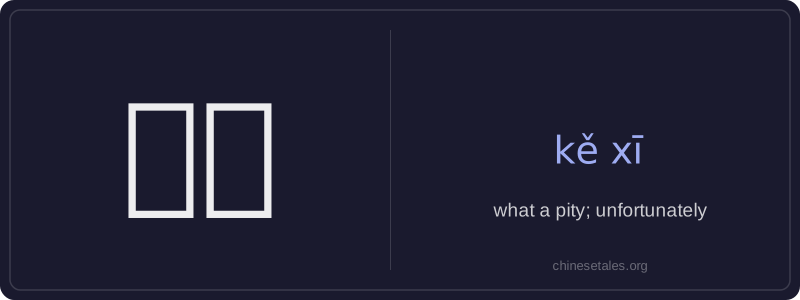
可惜 (kě xī) expresses regret or disappointment about something that has happened or cannot be changed — similar to 'what a pity' or 'unfortunately' in English. The character 可 (kě) means 'can' or 'may', and 惜 (xī) means 'to regret' or 'to lament'; together, they convey the sense of 'it is regrettable that...' or 'how sad it is that...'. It’s commonly used at the beginning or middle of a sentence to soften bad news or express empathetic disappointment.
This expression carries a gentle, often slightly literary or formal tone, but it’s widely used in everyday spoken and written Chinese — from casual conversations ('可惜我没去成') to news reports ('可惜事故造成三人受伤'). Unlike stronger expressions like 太糟糕了 (tài zāo gāo le), 可惜 conveys restraint and sympathy rather than shock or anger, making it especially appropriate when discussing missed opportunities, minor losses, or unfortunate but not catastrophic events.
Example Sentences
Related Words
中学
'Zhōngxué' literally combines 'zhōng' (middle)
见面
见面 literally means 'see face' — combining 见 (t
后来
Later (hòulái) is an adverb meaning 'afterwards'
背后
背后 literally means 'back + behind' and functions
我的
我的 (wǒ de) is a possessive pronoun meaning 'my'
这么
这么 (zhè me) is an adverb meaning 'so' or 'this
前面
前面 (qián miàn) literally combines 前 (qián, '
面条
‘面条’ (miàn tiáo) literally means ‘flour str