Word Explanation
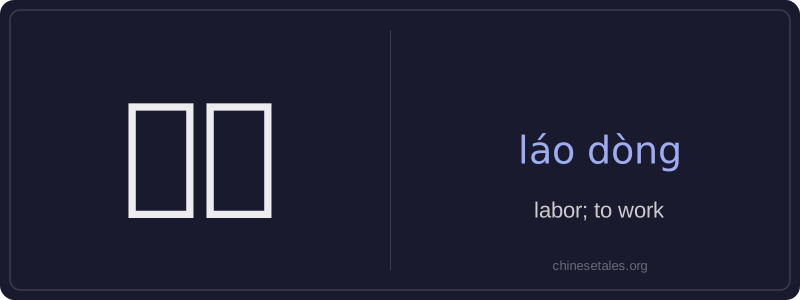
劳动 (láo dòng) is a compound word meaning 'labor' or 'to work', emphasizing purposeful, often physical or productive activity—especially in contexts like employment, social contribution, or manual effort. The first character 劳 (láo) conveys exertion, toil, or diligence, while 动 (dòng) means 'to move' or 'to act'; together, they evoke the idea of purposeful bodily or mental action toward a goal. Historically tied to socialist and educational values in China, 劳动 carries positive connotations of dignity, responsibility, and social value.
This word appears frequently in formal, institutional, or public discourse: Labor Day (劳动节), labor laws (劳动法), and school activities like 'labor education' (劳动教育). As a noun, it refers to work itself ('physical labor'); as a verb, it's used more formally or collectively ('to engage in labor'), rarely in casual speech about everyday chores (where 干活 or 工作 are preferred). It’s often paired with modifiers like 体力 (physical) or 脑力 (mental) to specify labor type.
Example Sentences
Related Words
中学
'Zhōngxué' literally combines 'zhōng' (middle)
见面
见面 literally means 'see face' — combining 见 (t
后来
Later (hòulái) is an adverb meaning 'afterwards'
背后
背后 literally means 'back + behind' and functions
我的
我的 (wǒ de) is a possessive pronoun meaning 'my'
这么
这么 (zhè me) is an adverb meaning 'so' or 'this
前面
前面 (qián miàn) literally combines 前 (qián, '
面条
‘面条’ (miàn tiáo) literally means ‘flour str