Word Explanation
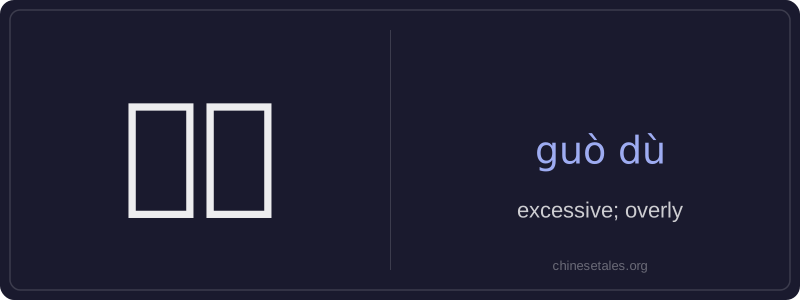
过度 (guò dù) means 'excessive' or 'overly' and functions primarily as an adjective or adverb in Chinese. Literally, 过 (guò) means 'to pass' or 'beyond', and 度 (dù) means 'degree' or 'measure'; together, they convey the idea of going beyond a reasonable or healthy limit. It often carries a negative connotation, implying imbalance, harm, or risk—especially in contexts involving health, behavior, or effort.
This word commonly modifies verbs (e.g., 过度工作 — 'to overwork'), adjectives (e.g., 过度紧张 — 'overly anxious'), or nouns (e.g., 过度消费 — 'excessive consumption'). It frequently appears in public health messaging, lifestyle advice, and medical discussions. Unlike standalone adverbs like 很 or 非常, 过度 emphasizes crossing a threshold into harmful or unsustainable territory—not just intensity, but inappropriate excess.
Example Sentences
Related Words
中学
'Zhōngxué' literally combines 'zhōng' (middle)
见面
见面 literally means 'see face' — combining 见 (t
后来
Later (hòulái) is an adverb meaning 'afterwards'
背后
背后 literally means 'back + behind' and functions
我的
我的 (wǒ de) is a possessive pronoun meaning 'my'
这么
这么 (zhè me) is an adverb meaning 'so' or 'this
前面
前面 (qián miàn) literally combines 前 (qián, '
面条
‘面条’ (miàn tiáo) literally means ‘flour str