Word Explanation
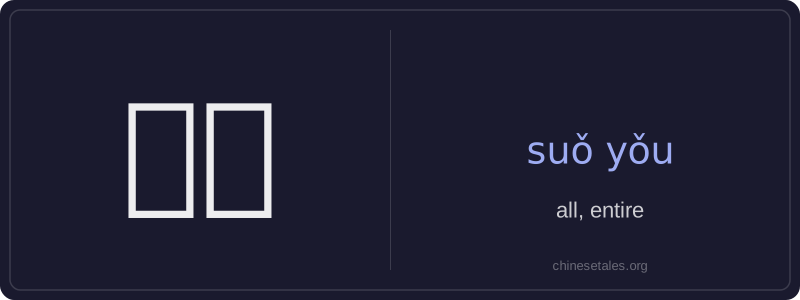
所有 (suǒ yǒu) literally combines 所 (suǒ), a classical particle indicating 'that which', and 有 (yǒu), meaning 'to have'. Together, they form a compound meaning 'all', 'the entirety of', or 'everything that exists in a given set'. It functions as both a noun ('all things') and an adjective ('entire', 'whole'), always modifying a noun that follows it — for example, 所有人 (all people) or 所有动物 (all animals). Unlike English 'all', 所有 cannot stand alone without a noun or pronoun; it requires a head noun to complete its meaning.
This term is neutral in register and widely used in both spoken and written Chinese. It frequently appears in formal contexts like news reports or policy documents, but also in everyday speech when emphasizing completeness — such as listing possessions, describing scope, or stating universal conditions. It’s especially common when referring to categories like animals, people, or objects in systematic or inclusive ways, making it useful for learners discussing biodiversity, ownership, or collective responsibility.
Example Sentences
Related Words
中学
'Zhōngxué' literally combines 'zhōng' (middle)
见面
见面 literally means 'see face' — combining 见 (t
后来
Later (hòulái) is an adverb meaning 'afterwards'
背后
背后 literally means 'back + behind' and functions
我的
我的 (wǒ de) is a possessive pronoun meaning 'my'
这么
这么 (zhè me) is an adverb meaning 'so' or 'this
前面
前面 (qián miàn) literally combines 前 (qián, '
面条
‘面条’ (miàn tiáo) literally means ‘flour str