Word Explanation
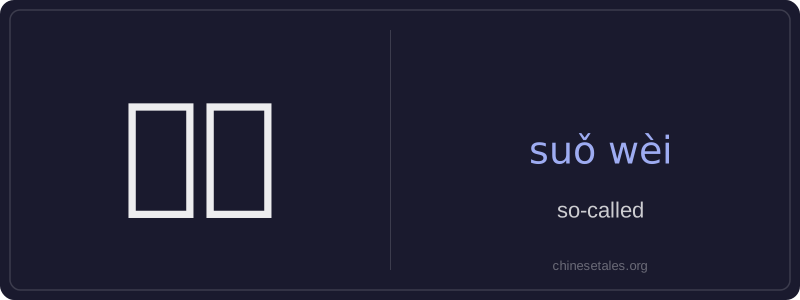
所谓 (suǒ wèi) is an adverbial phrase meaning 'so-called' or 'what is called'. It functions to introduce a term—often one the speaker views with skepticism, irony, or distance—before naming it. Literally, 所 (suǒ) is a structural particle marking the object of a verb, and 谓 (wèi) means 'to call' or 'to name'; together, they form a classical construction meaning 'that which is called'. The phrase typically appears before a noun or noun phrase and carries a subtle evaluative tone: it signals that the following term may be questionable, oversimplified, conventional, or not fully accurate.
所谓 is common in both spoken and written Chinese—especially in academic discussion, media commentary, and everyday critique. It often introduces widely used labels ('so-called experts', 'so-called solutions') or culturally loaded terms ('so-called face', 'so-called harmony'). Unlike neutral synonyms like 'called' or 'named', 所谓 implies the speaker is stepping back from the term’s assumed validity, inviting critical reflection rather than uncritical acceptance.
Example Sentences
Related Words
中学
'Zhōngxué' literally combines 'zhōng' (middle)
见面
见面 literally means 'see face' — combining 见 (t
后来
Later (hòulái) is an adverb meaning 'afterwards'
背后
背后 literally means 'back + behind' and functions
我的
我的 (wǒ de) is a possessive pronoun meaning 'my'
这么
这么 (zhè me) is an adverb meaning 'so' or 'this
前面
前面 (qián miàn) literally combines 前 (qián, '
面条
‘面条’ (miàn tiáo) literally means ‘flour str