Word Explanation
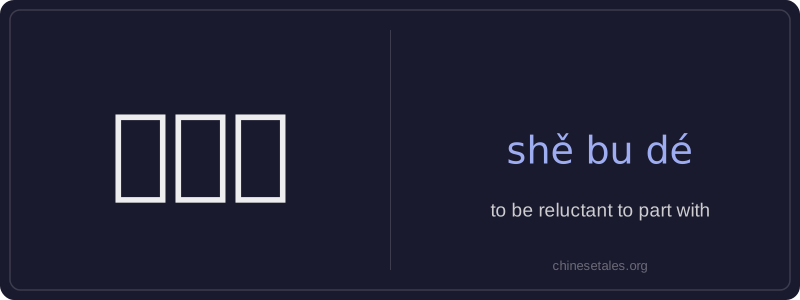
‘舍不得’ is a common verb phrase expressing emotional reluctance to part with someone or something—often due to affection, attachment, or sentimental value. Literally, 舍 (shě) means 'to give up' or 'to part with', 不 (bù) is the negation particle, and 得 (dé) here functions as a potential complement meaning 'able to'—so the whole phrase conveys 'cannot bring oneself to give up'. It reflects inner conflict: the mind may accept separation, but the heart resists.
This word is widely used in personal, familial, and nostalgic contexts—such as saying goodbye to loved ones, letting go of cherished possessions, or leaving familiar places. It carries warmth and tenderness, not just sadness; it implies deep care. While often used in spoken Chinese, it also appears in literature and songs. Note that it’s almost always followed by a noun (e.g., 舍不得孩子, 舍不得离开), and rarely stands alone.
Example Sentences
Related Words
中学
'Zhōngxué' literally combines 'zhōng' (middle)
见面
见面 literally means 'see face' — combining 见 (t
后来
Later (hòulái) is an adverb meaning 'afterwards'
背后
背后 literally means 'back + behind' and functions
我的
我的 (wǒ de) is a possessive pronoun meaning 'my'
这么
这么 (zhè me) is an adverb meaning 'so' or 'this
前面
前面 (qián miàn) literally combines 前 (qián, '
面条
‘面条’ (miàn tiáo) literally means ‘flour str