Word Explanation
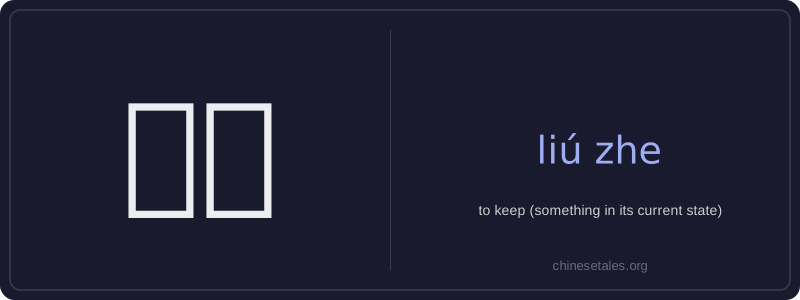
留着 (liú zhe) is a verb phrase meaning 'to keep (something) as it is' — typically to retain an object, state, or condition intentionally, without changing, removing, or using it immediately. The character 留 (liú) means 'to stay' or 'to retain', while 着 (zhe) is a structural particle indicating an ongoing or sustained state. Together, they emphasize that something remains in place or unchanged for a future purpose or personal preference.
This phrase is commonly used in everyday spoken and written Chinese when talking about saving items (e.g., food, money, clothing), preserving appearances (e.g., hair length, room layout), or maintaining situations (e.g., keeping a seat reserved). It often implies intentionality and continuity — not passive neglect, but active choice to leave something as-is. Unlike the simple verb 留 (liú), 留着 always carries this durative, resultative nuance and requires an object or context showing what is being kept.
Example Sentences
Related Words
中学
'Zhōngxué' literally combines 'zhōng' (middle)
见面
见面 literally means 'see face' — combining 见 (t
面条
‘面条’ (miàn tiáo) literally means ‘flour str
后来
Later (hòulái) is an adverb meaning 'afterwards'
背后
背后 literally means 'back + behind' and functions
我的
我的 (wǒ de) is a possessive pronoun meaning 'my'
这么
这么 (zhè me) is an adverb meaning 'so' or 'this
前面
前面 (qián miàn) literally combines 前 (qián, '