Word Explanation
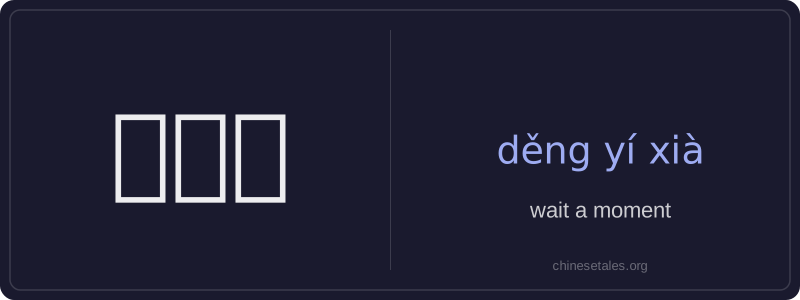
‘等一下’ literally combines ‘等’ (to wait), ‘一’ (one), and ‘下’ (a measure word for a brief action or occurrence), forming an idiomatic phrase meaning ‘wait a moment’ or ‘hold on.’ It functions as a polite, informal imperative used to ask someone to pause briefly—often in conversation, service interactions, or while multitasking. The phrase conveys immediacy and brevity; it’s not used for long waits (for which you’d say ‘等一会儿’ or ‘等一下儿’ in some dialects).
This expression is extremely common in daily spoken Chinese and appears frequently in face-to-face communication, phone calls, customer service, and digital messaging. While grammatically verb-like, it rarely takes aspect particles like ‘了’ or ‘过’—it stands alone as a complete utterance. Native speakers often soften it with rising intonation or add ‘好吗?’ (OK?) for extra politeness, especially with strangers or elders.
Example Sentences
Related Words
见面
见面 literally means 'see face' — combining 见 (t
背后
背后 literally means 'back + behind' and functions
中学
'Zhōngxué' literally combines 'zhōng' (middle)
面条
‘面条’ (miàn tiáo) literally means ‘flour str
后来
Later (hòulái) is an adverb meaning 'afterwards'
我的
我的 (wǒ de) is a possessive pronoun meaning 'my'
这么
这么 (zhè me) is an adverb meaning 'so' or 'this
前面
前面 (qián miàn) literally combines 前 (qián, '