Word Explanation
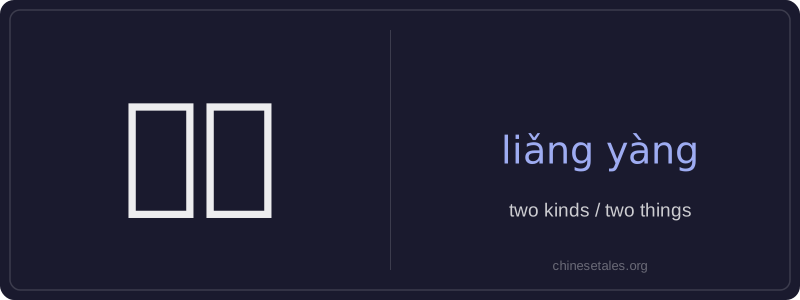
‘两样’ literally combines ‘两’ (liǎng), meaning ‘two’, and ‘样’ (yàng), meaning ‘kind’, ‘type’, or ‘sort’. Together, it functions as a noun or numeral phrase meaning ‘two kinds’ or ‘two things’ — emphasizing variety or distinction between two items, not just quantity. It’s commonly used when selecting, comparing, or listing items, especially in daily contexts like shopping, ordering food, or describing preferences.
The phrase implies contrast or diversity: the two items are typically different in nature, category, or quality — for example, two different fruits, dishes, or tasks. Unlike ‘两个’ (liǎng gè), which counts countable nouns (e.g., two apples), ‘两样’ focuses on types or categories (e.g., two kinds of fruit). It often appears after measure words or verbs like ‘要’ (want), ‘买’ (buy), or ‘尝’ (taste), and is neutral in register — appropriate in both spoken and written Chinese.
Example Sentences
Related Words
见面
见面 literally means 'see face' — combining 见 (t
背后
背后 literally means 'back + behind' and functions
中学
'Zhōngxué' literally combines 'zhōng' (middle)
面条
‘面条’ (miàn tiáo) literally means ‘flour str
后来
Later (hòulái) is an adverb meaning 'afterwards'
我的
我的 (wǒ de) is a possessive pronoun meaning 'my'
这么
这么 (zhè me) is an adverb meaning 'so' or 'this
前面
前面 (qián miàn) literally combines 前 (qián, '