Word Explanation
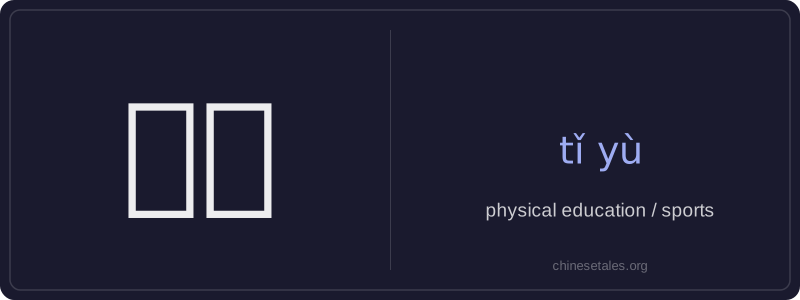
体育 (tǐ yù) literally combines 体 (tǐ), meaning 'body' or 'physical', and 育 (yù), meaning 'to nurture' or 'to educate'. Together, they convey the idea of nurturing the body through structured physical activity — hence its core meanings: 'physical education' (as a school subject) and 'sports' (as organized athletic activities). It’s commonly used in academic, institutional, and recreational contexts.
In schools, 体育 refers to the required PE class where students engage in exercises, games, and team sports. Outside school, it broadly covers competitive and amateur sports — from basketball and swimming to Olympic events. While often translated as 'sports', note that 体育 emphasizes the educational, developmental, and health-oriented aspect more than the English word 'sports', which can focus on competition or entertainment. It rarely refers to individual fitness routines (e.g., going to the gym alone); for that, people usually say 健身 (jiànshēn).
Example Sentences
Related Words
见面
见面 literally means 'see face' — combining 见 (t
背后
背后 literally means 'back + behind' and functions
中学
'Zhōngxué' literally combines 'zhōng' (middle)
面条
‘面条’ (miàn tiáo) literally means ‘flour str
后来
Later (hòulái) is an adverb meaning 'afterwards'
我的
我的 (wǒ de) is a possessive pronoun meaning 'my'
这么
这么 (zhè me) is an adverb meaning 'so' or 'this
前面
前面 (qián miàn) literally combines 前 (qián, '