Word Explanation
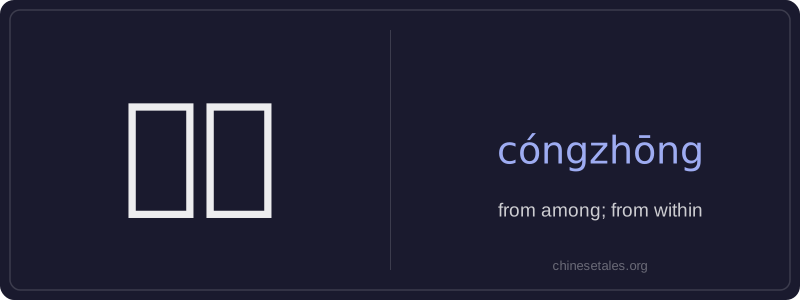
从中 literally combines 从 (cóng, 'from') and 中 (zhōng, 'middle' or 'within'), forming a prepositional phrase meaning 'from among' or 'from within'. It indicates selection or origin from a group, collection, or enclosed space — emphasizing that something emerges or is chosen out of a larger set or environment. Unlike the simpler 从, which marks general origin (e.g., 从北京), 从中 always implies an internal source: a crowd, a list, a box, a species, or even an abstract body of information.
This phrase is commonly used in both spoken and written Chinese, especially in formal or descriptive contexts — for instance, when highlighting how a specific animal is selected from a group, or how a behavior arises from within a natural setting. It often appears before verbs like 挑选 (to select), 发现 (to discover), or 衍生 (to derive). While it may appear noun-like in structure, it functions strictly as a preposition governing a noun or noun phrase that follows it.
Example Sentences
Related Words
见面
见面 literally means 'see face' — combining 见 (t
背后
背后 literally means 'back + behind' and functions
中学
'Zhōngxué' literally combines 'zhōng' (middle)
面条
‘面条’ (miàn tiáo) literally means ‘flour str
后来
Later (hòulái) is an adverb meaning 'afterwards'
我的
我的 (wǒ de) is a possessive pronoun meaning 'my'
这么
这么 (zhè me) is an adverb meaning 'so' or 'this
前面
前面 (qián miàn) literally combines 前 (qián, '