Word Explanation
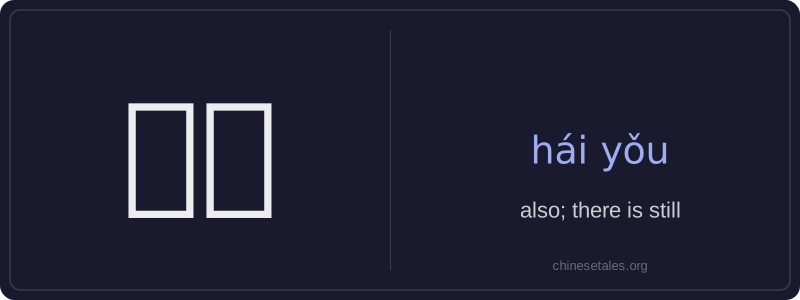
还有 (hái yǒu) is a versatile two-character expression that functions primarily as a conjunction meaning 'also', 'in addition', or 'besides', and as an adverb meaning 'there is still' or 'there remains'. The first character 还 (hái) conveys continuation or addition ('still', 'yet'), while 有 (yǒu) means 'to have' or 'there is/are'. Together, they express either the existence of something additional (e.g., another item, person, or task) or the ongoing presence of something not yet completed or exhausted.
This word commonly appears at the beginning or middle of a sentence to introduce extra information — especially when listing items, people, or obligations. It’s neutral in register and widely used in both spoken and written Mandarin. Unlike English 'also', 还有 usually precedes the noun or clause it modifies and rarely stands alone at the end of a sentence. It often implies contrast with what was previously mentioned — not just addition, but relevant continuation.
Example Sentences
Related Words
见面
见面 literally means 'see face' — combining 见 (t
背后
背后 literally means 'back + behind' and functions
中学
'Zhōngxué' literally combines 'zhōng' (middle)
面条
‘面条’ (miàn tiáo) literally means ‘flour str
后来
Later (hòulái) is an adverb meaning 'afterwards'
我的
我的 (wǒ de) is a possessive pronoun meaning 'my'
这么
这么 (zhè me) is an adverb meaning 'so' or 'this
前面
前面 (qián miàn) literally combines 前 (qián, '