Word Explanation
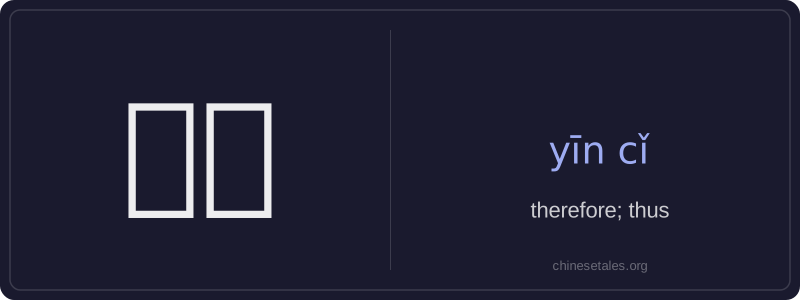
因此 is a formal conjunction meaning 'therefore' or 'thus', used to introduce a logical conclusion based on previously stated information. It combines 因 (yīn), meaning 'cause' or 'reason', and 此 (cǐ), meaning 'this'. Together, they literally mean 'because of this', signaling a direct causal relationship between two clauses or sentences. It typically appears at the beginning of a clause or sentence, followed by a comma in written Chinese.
This word is common in academic writing, news reports, and formal speech — but rare in casual conversation, where people often use more colloquial alternatives like 所以. Therefore, learners should avoid overusing 因此 in informal chats. It functions similarly to English conjunctive adverbs like 'hence' or 'consequently', requiring clear antecedent reasoning to make sense. Its tone is neutral-to-formal, and it always connects ideas logically — never emotionally or temporally.
Example Sentences
Related Words
见面
见面 literally means 'see face' — combining 见 (t
背后
背后 literally means 'back + behind' and functions
中学
'Zhōngxué' literally combines 'zhōng' (middle)
面条
‘面条’ (miàn tiáo) literally means ‘flour str
后来
Later (hòulái) is an adverb meaning 'afterwards'
我的
我的 (wǒ de) is a possessive pronoun meaning 'my'
这么
这么 (zhè me) is an adverb meaning 'so' or 'this
前面
前面 (qián miàn) literally combines 前 (qián, '