Word Explanation
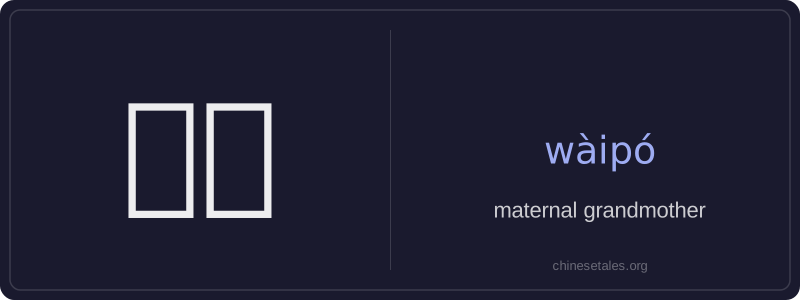
‘外婆’ (wàipó) means ‘maternal grandmother’ — the mother’s mother. The first character 外 (wài) literally means ‘outside’ or ‘maternal’, distinguishing this grandmother from the paternal one (who is called ‘爷爷’ or ‘奶奶’). The second character 婆 (pó) means ‘old woman’ or ‘grandmother’, often used in kinship terms for elder female relatives on the mother’s side. Together, 外婆 specifically identifies the grandmother through the mother’s lineage, reflecting Chinese kinship terminology’s emphasis on distinguishing maternal and paternal sides.
This term is commonly used in everyday speech, especially by children and adults addressing or referring to their mother’s mother. It carries warmth and familiarity, and is standard across most Mandarin-speaking regions. Unlike some formal titles, ‘外婆’ is neutral in register — appropriate in both casual family conversations and respectful contexts. It is not used for paternal grandmothers, nor for unrelated older women; using it incorrectly may cause confusion about family relationships.
Example Sentences
Related Words
见面
见面 literally means 'see face' — combining 见 (t
背后
背后 literally means 'back + behind' and functions
中学
'Zhōngxué' literally combines 'zhōng' (middle)
面条
‘面条’ (miàn tiáo) literally means ‘flour str
后来
Later (hòulái) is an adverb meaning 'afterwards'
我的
我的 (wǒ de) is a possessive pronoun meaning 'my'
这么
这么 (zhè me) is an adverb meaning 'so' or 'this
前面
前面 (qián miàn) literally combines 前 (qián, '