Word Explanation
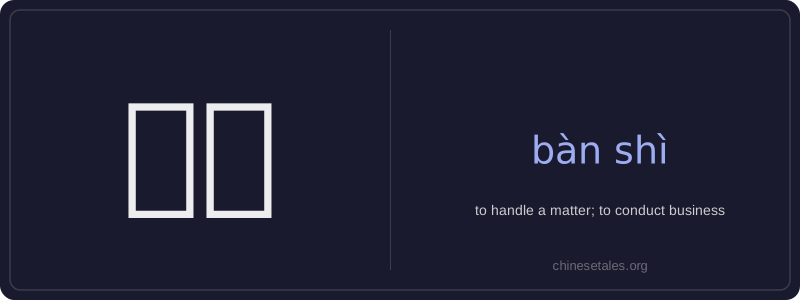
办 (bàn) means 'to handle', 'to manage', or 'to carry out', while 事 (shì) means 'matter', 'affair', or 'business'. Together, 办事 literally means 'to handle a matter' and functions primarily as a verb meaning to conduct official or practical business — such as applying for documents, resolving issues, or completing administrative tasks. It’s commonly used in formal or semi-formal contexts, especially when interacting with government offices, banks, schools, or service providers.
The phrase often implies purposeful, goal-oriented action rather than casual activity. While it can appear in spoken Chinese, it carries a slightly serious or procedural tone — you wouldn’t say 办事 to mean 'running an errand' in a light, everyday sense (for that, use 跑腿 or 办点事). It’s frequently paired with objects like 手续 (procedures), 证件 (ID documents), or 公事 (official business), and may be modified by adverbs like 认真地 (seriously) or 快速地 (quickly).
Example Sentences
Related Words
见面
见面 literally means 'see face' — combining 见 (t
背后
背后 literally means 'back + behind' and functions
中学
'Zhōngxué' literally combines 'zhōng' (middle)
面条
‘面条’ (miàn tiáo) literally means ‘flour str
后来
Later (hòulái) is an adverb meaning 'afterwards'
我的
我的 (wǒ de) is a possessive pronoun meaning 'my'
这么
这么 (zhè me) is an adverb meaning 'so' or 'this
前面
前面 (qián miàn) literally combines 前 (qián, '