Word Explanation
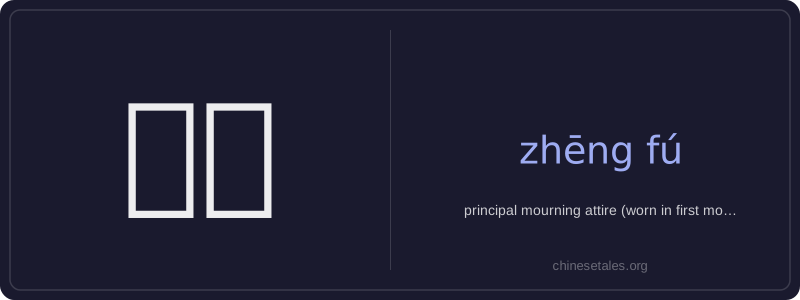
'Zhēng fú' refers to the principal mourning attire worn during the first month after a family member’s death in traditional Chinese funerary rites. The character '正' (zhēng) here means 'primary' or 'principal', not its more common meaning of 'correct'; it reflects the highest level of ritual solemnity and filial obligation. '服' (fú) means 'attire' or 'garment', specifically ceremonial clothing worn for ritual purposes. Together, 正服 denotes the most formal and prescribed set of white hemp garments—typically including robe, belt, cap, and shoes—worn exclusively by immediate family members such as children, spouses, or siblings.
This term belongs to classical ritual vocabulary rooted in the 'Book of Rites' (Lǐjì) and remains relevant in scholarly discussions of Confucian mourning customs, historical dramas, or academic studies of traditional Chinese ethics. While rarely used in modern daily speech, it appears in literature, museum exhibits on ancient rites, and ancestral commemoration ceremonies among culturally conscious families. It is distinct from later-stage mourning clothes like '期服' (qī fú) or '功服' (gōng fú), which denote reduced ritual intensity.
Example Sentences
Related Words
见面
见面 literally means 'see face' — combining 见 (t
背后
背后 literally means 'back + behind' and functions
中学
'Zhōngxué' literally combines 'zhōng' (middle)
面条
‘面条’ (miàn tiáo) literally means ‘flour str
后来
Later (hòulái) is an adverb meaning 'afterwards'
我的
我的 (wǒ de) is a possessive pronoun meaning 'my'
这么
这么 (zhè me) is an adverb meaning 'so' or 'this
前面
前面 (qián miàn) literally combines 前 (qián, '