Word Explanation
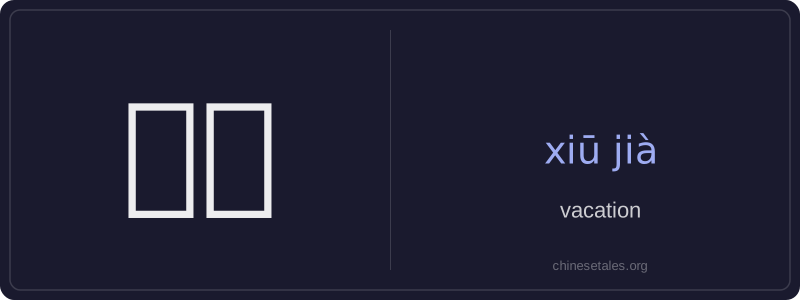
休假 (xiū jià) literally combines 休 (xiū), meaning 'to rest' or 'to stop working', and 假 (jià), meaning 'leave' or 'holiday'. Together, they form a noun meaning 'vacation' — a period of authorized time off from work or study. It’s commonly used in formal and semi-formal contexts, such as workplace announcements, HR policies, or personal plans involving official leave.
Unlike the more casual term 度假 (dù jià, 'to go on vacation'), 休假 emphasizes the administrative or institutional aspect — it’s about taking approved time off, not necessarily traveling. It can refer to paid annual leave, sick leave, or public holidays granted by employers or schools. The word is neutral in register and widely understood across age groups and regions in Mandarin-speaking communities.
Example Sentences
Related Words
见面
见面 literally means 'see face' — combining 见 (t
背后
背后 literally means 'back + behind' and functions
中学
'Zhōngxué' literally combines 'zhōng' (middle)
面条
‘面条’ (miàn tiáo) literally means ‘flour str
后来
Later (hòulái) is an adverb meaning 'afterwards'
我的
我的 (wǒ de) is a possessive pronoun meaning 'my'
这么
这么 (zhè me) is an adverb meaning 'so' or 'this
前面
前面 (qián miàn) literally combines 前 (qián, '